“Under these circumstances the most anodyne book was a source of danger from the simple fact that love was alluded to, and woman depicted as an attractive creature; and this was enough to account for all—for the inherent ignorance of Catholics, since it was proclaimed as the preventive cure for temptations—for the instinctive horror of art, since to these craven souls every written and studied work was in its nature a vehicle of sin and an incitement to fall. Would it not really be far more sensible and judicious to open the windows, to air the rooms, to treat these souls as manly beings, to teach them not to be so much afraid of their own flesh, to inculcate the firmness and courage needed for resistance? For really it is rather like a dog which barks at your heels and snaps at your legs if you are afraid of him, but who beats a retreat if you turn on him boldly and drive him off. The fact remains that these schemes of education have resulted, on the one hand, in the triumph of the flesh in the greater number of men who have been thus brought up and then thrown into a worldly life, and on the other, in a wide diffusion of folly and fear, an abandonment of the possessions of the intellect and the capitulation of the Catholic army surrendering without a blow to the inroads of profane literature, which takes possession of territory that it has not even had the trouble of conquering. This really was madness! The Church had created art, had cherished it for centuries; and now by the effeteness of her sons she was cast into a corner. All the great movements of our day, one after the other—romanticism, naturalism—had been effected independently of her, or even against her will. If a book were not restricted to the simplest tales, or pleasing fiction ending in virtue rewarded and vice punished, that was enough; the propriety of beadledom was at once ready to bray. As soon as the most modern form of art, the most malleable and the broadest—the Novel—touched on scenes of real life, depicted passion, became a psychological study, an effort of analysis, the army of bigots fell back all along the line. The Catholic force, which might have been thought better prepared than any others to contest the ground which theology had long since explored, retired in good order, satisfied to cover its retreat by firing from a safe distance, with its old-fashioned match-lock blunderbusses, on works it had neither inspired nor written. The Church party, centuries behind the time, and having made no attempt to follow the evolution of style in the course of ages, now turned to the rustic who can scarcely read; it did not understand more than half of the words used by modern writers, and had become, it must be said, a camp of the illiterate. Incapable of distinguishing the good from the bad, it included in one condemnation the filth of pornography and real works of art; in short, it ended by emitting such folly and talking such preposterous nonsense, that it fell into utter discredit and ceased to count at all. And it would have been so easy for it to work on a little way, to try to keep up with the times, and to understand, to convince itself whether in any given work the author was writing up the Flesh, glorifying it, praising it, and nothing more, or whether, on the contrary, he depicted it merely to buffet it—hating it. And, again, it would have done well to convince itself that there is a chaste as well as a prurient nude, and that it should not cry shame on every picture in which the nude is shown. Above all, it ought to have recognized that vices may well be depicted and studied with a view to exciting disgust of them and showing their horrors.”
Quote by Joris-Karl Huysmans
Book:The Cathedral
Work
The Cathedral
Browse quotes and source details for this work. more
Author
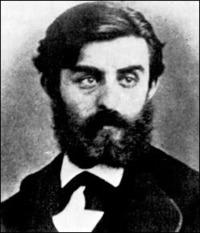
Joris-Karl Huysmans
Joris-Karl Huysmans was a French novelist known for his exploration of themes such as decadence and aestheticism. His most celebrated novel, 'À la recherche du temps perdu', is regarded as a masterpiece of French literature. more
You May Also Like
Source: The Call of the Heart
“You like the taste of sin. I like the taste of ecstasy. That’s not the same babe.”
“Don’t freak out, I’m getting into the bed,” he said.”
Source: Her Secret Fling
Source: Introducción al existencialismo
Source: Vespers in Vienna
Source: Blurry Daydream: When Faith Feels Like Make Believe
Source: 12 Steps to Destruction: Codependecy/Recovery Heresies
Source: 12 Steps to Destruction: Codependecy/Recovery Heresies