Quotessence
Home / Quotes / Quote by Albert Camus

Quote by Albert Camus

“But art, because of the inherent freedom that is its very essence, as I have tried to explain, unites, wherever tyranny divides. So how could it be surprising that art is the chosen enemy of every kind of oppression? How could it be surprising that artists and intellectuals are the primary victims of modern tyrannies, whether they are right-wing or left-wing? Tyrants know that great works embody a force for emancipation that is only mysterious to those who do not worship art. Every great work of art makes humanity richer and more admirable, and that is its only secret. And even thousands of concentration camps and prison cells cannot obliterate this deeply moving testimony to dignity.”

Quote by Albert Camus

Work

Create Dangerously

Browse quotes and source details for this work. more

Author

Albert Camus
Albert Camus

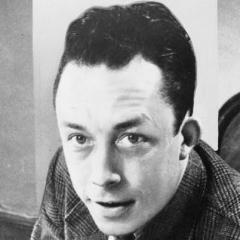
Albert Camus was a French author and philosopher, born on November 7, 1913, and died on January 4, 1960. Known for his unique existentialist philosophy and profound insights into human suffering, Camus' works include 'The Stranger', 'The Plague', and 'The Myth of Sisyphus', which have had a profound impact on 20th-century literature. more

You May Also Like

“The knight is a man of blood and iron, a man familiar with the sight of smashed faces and the ragged stumps of lopped-off limbs; he is also a demure, almost maidenlike, guest in a hall, a gentle, modest, unobtrusive man. He is not compromise or happy mean between ferocity and meekness; he is fierce to the nth and meek to the nth. The man who combines both characters – the knight – is not a work of nature but of art; of that art which has human beings, instead of canvas or marble, for its medium.”

“I have treated many artists. There are among them many neurotics, so many that one finally comes to believe that one cannot be an artist without being neurotic. Again I found in them that inner conflict which is characteristic of modern man: the conflict between a right intuition (namely, that their vocation has fundamental importance for the destiny of humanity) and a false idea (namely, that art is superfluous luxury).”

“The Ilhalmiut do not fill canvases with their paintings, or inscribe figures on rocks, or carve figurines in clay or in stone, because in the lives of the People there is no room for the creation of objects of no practical value. What purpose is there in creating beautiful things if these must be abandoned when the family treks out over the Barrens? But the artistic sense is present and strongly developed. It is strongly alive in their stories and songs, and in the string-figures, but they also use it on the construction of things which assist in their living and in these cases it is no less an art. The pleasure of abstract creation is largely denied to them by the nature of the land, but still they know how to make beauty. They know how to make beauty, and they also know how to enjoy it-- for it is no uncommon thing to see an Ilhalmio man squatting silently on a hill crest and watching, for hours at a time, the swift interplay of colors that sweep the sky at sunset and dawn. It is not unusual to see an Ilhalmio pause for long minutes to watch the sleek beauty of a weasel or to stare into the brilliant heart of some minuscule flower. And these things are done quite unconsciously, too. There is no word for 'beauty'--as such--in their language; it needs no words in their hearts.”

“No respect for beauty – that was characteristic of today’s society. The works of the great masters were at most employed as ironic references, or used in advertising. Michelangelo’s ‘The Creation of Adam’, where you see a pair of jeans in place of the spark. The whole point of the picture, at least as he saw it, was that these two monumental bodies each came to an end in two index fingers that almost, but not quite, touched. There was a space between them a millimetre or so wide. And in this space – life. The sculptural size and richness of detail of this picture was simply a frame, a backdrop, to emphasise the crucial void in its centre. The point of emptiness that contained everything. And in its place a person had superimposed a pair of jeans.”