Quotessence
Home / Quotes / Quote by W. Somerset Maugham

Quote by W. Somerset Maugham

“I have an idea that some men are born out of their due place. Accident has cast them amid certain surroundings, but they have always a nostalgia for a home they know not. They are strangers in their birthplace, and the leafy lanes they have known from childhood or the populous streets in which they have played, remain but a place of passage. They may spend their whole lives aliens among their kindred and remain aloof among the only scenes they have ever known. Perhaps it is this sense of strangeness that sends men far and wide in the search for something permanent, to which they may attach themselves. Perhaps some deep-rooted atavism urges the wanderer back to lands which his ancestors left in the dim beginnings of history.”

Quote by W. Somerset Maugham

Work

The Moon and Sixpence

This novel delves into the life of a man who abandons his conventional life to pursue his passion for painting. more

Author
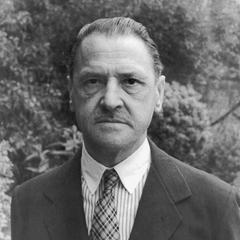
W. Somerset Maugham
W. Somerset Maugham

W. Somerset Maugham was a British playwright known for his sharp wit and insightful portrayal of human nature. Born on January 25, 1874, and passing away on December 16, 1965, Maugham's plays often delved into the complexities of human relationships and the social dynamics of his era. more

You May Also Like

“Your house, being the place in which you read, can tell us the position books occupy in your life, if they are a defense you set up to keep the outside world at a distance, if they are a dream into which you sink as if into a drug, or bridges you cast toward the outside, toward the world that interests you so much that you want to multiply and extend its dimensions through books.”

“No settled family or community has ever called its home place an “environment.” None has ever called its feeling for its home place “biocentric” or “anthropocentric.” None has ever thought of its connection to its home place as “ecological,” deep or shallow. The concepts and insights of the ecologists are of great usefulness in our predicament, and we can hardly escape the need to speak of “ecology” and “ecosystems.” But the terms themselves are culturally sterile. They come from the juiceless, abstract intellectuality of the universities which was invented to disconnect, displace, and disembody the mind. The real names of the environment are the names of rivers and river valleys; creeks, ridges, and mountains; towns and cities; lakes, woodlands, lanes roads, creatures, and people. And the real name of our connection to this everywhere different and differently named earth is “work.” We are connected by work even to the places where we don’t work, for all places are connected; it is clear by now that we cannot exempt one place from our ruin of another. The name of our proper connection to the earth is “good work,” for good work involves much giving of honor. It honors the source of its materials; it honors the place where it is done; it honors the art by which it is done; it honors the thing that it makes and the user of the made thing. Good work is always modestly scaled, for it cannot ignore either the nature of individual places or the differences between places, and it always involves a sort of religious humility, for not everything is known. Good work can be defined only in particularity, for it must be defined a little differently for every one of the places and every one of the workers on the earth. The name of our present society’s connection to the earth is “bad work” – work that is only generally and crudely defined, that enacts a dependence that is ill understood, that enacts no affection and gives no honor. Every one of us is to some extent guilty of this bad work. This guilt does not mean that we must indulge in a lot of breast-beating and confession; it means only that there is much good work to be done by every one of us and that we must begin to do it.”