Quotessence
Home / Quotes / Quote by Milan Kundera

Quote by Milan Kundera

“Raised as we are on the mythology of the Old Testament, we might say that an idyll is an image that has remained with us like a memory of Paradise: life in Paradise was not like following a straight line to the unknown; it was not an adventure. It moved in a circle among known objects. Its monotony bred happiness, not boredom.”

Quote by Milan Kundera

Work

The Unbearable Lightness of Being

Browse quotes and source details for this work. more

Author
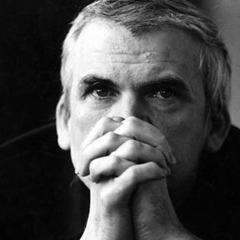
Milan Kundera
Milan Kundera

Milan Kundera is a renowned Czech-French writer known for his profound psychological insights and unique narrative techniques. His works often explore themes of personal freedom, love, morality, and existentialism, with notable titles including 'The Unbearable Lightness of Being' and 'The Joke'. more

You May Also Like

“Fairest of the deathless gods. This idea the Greeks had of him is best summed up not by a poet, but by a philosopher, Plato: "Love—Eros—makes his home in men's hearts, but not in every heart, for where there is hardness he departs. His greatest glory is that he cannot do wrong nor allow it; force never comes near him. For all men serve of him their own free will. And he whom Love touches not walks in darkness.”

“The forest itself has different names in different tongues — Westermain, Arden, Birnam, Broceliande; and in places there are separate trees named, such as that on the outskirts against which a young Northern poet saw a spectral wanderer leaning, or, in the unexplored centre of which only rumours reach even poetry, Igdrasil of one myth, or the Trees of Knowledge and Life of another. So that indeed the whole earth seems to become this one enormous forest, and our longest and most stable civilizations are only clearings in the midst of it.”

“الفانتازيا هي أقدم نوع قصصي عرفه الإنسان، فهي تعد جزء من اللاوعي الجمعي للجنس البشري، وقد امتلأت مخيلة الإنسان البدائي بحكايات عن الآلهة والبشر والسحرة والتنانين والوحوش الخيالية والأسطورية، كما أنهم وضعوا تفسيرات أسطورية للظواهر الطبيعية الغامضة التي وقف الإنسان البدائي حائرًا أمامها، مثل البرق: فهو مطرقة ثور عند الإسكندنافيين، وهو أسهم زيوس عند الإغريق.”

“Connecting the great universal myths of cataclysm, is it possible that such coincidences that cannot be coincidences, and accidents that cannot be accidents, could denote the global influence of an ancient, though as yet unidentified, guiding hand? If so, could it be that same hand, during and after the last Ice Age, which drew the series of highly accurate and technically advanced world maps reviewed in Part I? And might not that same hand have left its ghostly fingerprints on another body of universal myths? those concerning the death and resurrection of gods, and great trees around which the earth and heavens turn, and whirlpools, and churns, and drills, and other similar revolving, grinding contrivances?”