Quotessence
Home / Quotes / Quote by Louisa May Alcott

Quote by Louisa May Alcott

Work

Little Women

Set in the mid-19th century, this enduring tale follows the adventures and challenges of Meg, Jo, Beth, and Amy March, four sisters from a modest New England family. The narrative explores themes of love, loss, and the pursuit of individual dreams amidst the backdrop of a turbulent period in American history. more
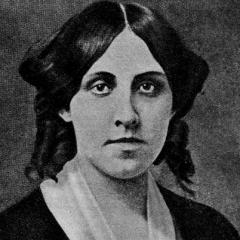
Author

Louisa May Alcott
Louisa May Alcott

American novelist, famous for works such as 'Little Women'. Born on November 29, 1832, and died on March 6, 1888. more

You May Also Like

“I found a room, both quiet and slow, a room where the walls are thick. Where pixie dust is kept in jars, and paper rockets soar to Mars, and battles leave no lasting scars as clocks forget to tick. I guard this room, both small and bare, this room in which stories live. Where Peter Pan and Alice play, and Sinbad sails at dawn of day, and wolves cry 'boy' to get their way when ogres won’t forgive. With you I’ll share my hiding place, this room under cloak and spell. We’ll snuggle up inside a nook, and read a venturous story book, that makes us question in a look what nonsense fairies tell. In fictive plots and fabled ends, Our happy-e’er-afters dwell!”

“All of us have to learn how to invent our lives, make them up, imagine them. We need to be taught these skills; we need guides to show is how. Without them, our lives get made up for us by other people. Human beings have always joined in groups to imagine how best to live and help one another carry out the plan. The essential function of human community is to arrive at some agreement on what we need, what life ought to be, what we want our children to learn, and then to collaborate in learning and teaching so that we and they can go on the way we think is the right way. Small communities with strong traditions are often clear about the way they want to go, and good at teaching it. But tradition may crystallize imagination to the point of fossilizing it as dogma and forbidding new ideas. Larger communities, such as cities, open up room for people to imagine alternatives, learn from people of different traditions, and invent their own ways to live. As alternatives proliferate, however, those who take the responsibility of teaching find little social and moral consensus on way they should be teaching -- what we need, what life ought to be. In our time of huge populations exposed continuously to reproduced voices, images, and words used for commercial and political profit, there are too many people who want to and can invent us, own us, shape and control us through seductive and powerful media. It's a lot to ask of a child to find a way through all that alone. Nobody can do anything very much, really, alone. What a child needs, what we all need, is to find some other people who have imagined life along lines that make sense to us and allow some freedom, and listen to them. Not hear passively, but listen.”

“If you want to know what makes you happy, imagine your very last day on this earth. Think about who you would wish to spend it with, where you might be and what you might be doing. For me, I would wish to spend it with the ones I love, somewhere not far from Nature, by the ocean, or maybe in a vibrant city, in a street with sights and sounds of people. Perhaps there's a vista of a fountain or a river... and watching the world go by, I'd be writing, completing the last chapter to a final book ...”

“All of us have to learn how to invent our lives, make them up, imagine them. We need to be taught these skills; we need guides to show us how. Without them, our lives get made up for us by other people. Human beings have always joined in groups to imagine how best to live and help one another carry out the plan. The essential function of human community is to arrive at some agreement on what we need, what life ought to be, what we want our children to learn, and then to collaborate in learning and teaching so that we and they can go on the way we think is the right way. Small communities with strong traditions are often clear about the way they want to go, and good at teaching it. But tradition may crystallize imagination to the point of fossilizing it as dogma and forbidding new ideas. Larger communities, such as cities, open up room for people to imagine alternatives, learn from people of different traditions, and invent their own ways to live. As alternatives proliferate, however, those who take the responsibility of teaching find little social and moral consensus on what they should be teaching -- what we need, what life ought to be. In our time of huge populations exposed continuously to reproduced voices, images, and words used for commercial and political profit, there are too many people who want to and can invent us, own us, shape and control us through seductive and powerful media. It's a lot to ask of a child to find a way through all that alone. Nobody can do anything very much, really, alone. What a child needs, what we all need, is to find some other people who have imagined life along lines that make sense to us and allow some freedom, and listen to them. Not hear passively, but listen.”