Quotessence
Home / Quotes / Quote by Soren Kierkegaard

Quote by Soren Kierkegaard

“If you do not live in some out-of-the-way place in the world, if you live in a populous city, and you direct your attention outwards, sympathetically engrossing yourself in this way into the world around you, that in this relation, you relate yourself to yourself as an individual with eternal responsibility? Or do you press yourself into the crowd, where the one excuses himself with the others, where at one moment there are, so to speak, many, and where in the next moment, each time that the talk touches upon responsibility, there is no on? Do you judge like the crowd, in its capacity as a crowd? You are not obliged to have an opinion about what you do not understand. No, on the contrary, you are eternally excused from that. But you are eternally responsible as an individual to render and account for your opinion, and for your judgement. And in eternity, you will not be asked inquisitively and professionally, as though by a newspaper reporter, whether there were many that had the same--wrong opinion. You will be asked only whether have held it, whether you have spoiled your soul by joining in this frivolous and thoughtless judging, because the others, because the many judged thoughtlessly. You will be asked only whether you may not have ruined the best within you by joining the crowd in its defiance, thinking that you were many and therefore you had the prerogative, because you were many, that is, because you were many who were wrong. In eternity it will be asked whether you may not have damaged a good thing in order that you also might judge with them that did not know how to judge, but who possessed the crowd's strength, which in the temporal sense is significant but to which eternity is wholly indifferent.”

Quote by Soren Kierkegaard

Work

Author

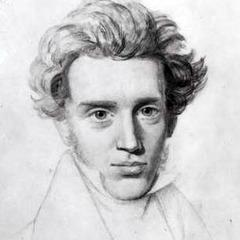
Soren Kierkegaard
Soren Kierkegaard

Søren Kierkegaard was a 19th-century Danish philosopher known for his existentialist philosophy and profound explorations of religious, ethical, and aesthetic issues. His ideas have had a profound impact on subsequent philosophers and literature. more

You May Also Like

“Are you jealous?" She has a half-smile, a laugh waiting to escape. "No. Not jealous." I squeeze her to me, lifting her off the ground back onto her tip-toes. "Possessive. You belong to me." I push her away. "Take off that dress." I allow some anger into my voice. "Now!" She jumps in place a little and reaches behind her to unzip. I grab her shoulders and twist her around. Putting my hands at the base of her neck, I rip the dress down the middle, tearing the zipper apart. She half gasps, half cries out. "You won't be wearing that again.”

“Some parents cannot distinguish between punishment and discipline. Anyone can punish a child and many parents do it out of frustration. Discipline requires time, patience, and love and may include some punishment. To punish children without discipline usually involves a parent who is frustrated and has turned to anger.”

“Benim kişisel duygum, Midori enikonu sıradışı bir kız olmalı. Mektuplarınızı okurken, ona aşık olduğunuzu iyice anladım. Naoko'ya aşık olduğunuzu da kabul ediyorum. Ve bu sizin suçunuz değil. Böyle şeyler sık sık oluyor. Çok güzel bir havada çok güzel bir gölde gemiyle gezmek kadar basit bir şey. Gökyüzü pırıl pırıl, manzara göz kamaştırıcı. Bu yüzden, böyle acı çekmekten vazgeçeceksiniz. İnsan kendini bırakınca işler olması gerektiği gibi gider ve ne yaparsanız yapın, insanlar kırılınca kırılmıştır demektir. Yaşam böyle. Belki size biraz çok bilmiş gibi görünebilirim, ama sanırım sizin de başınızın çaresine bakmanızın zamanı yakında gelip çatacaktır: Kimi zaman yaşamı, istediğiniz biçime sokmak için fazla zorluyorsunuz. Eğer bir akıl hastanesine girmek istemiyorsanız, yüreğinizi biraz daha açmanız ve kendinizi olayların akışına bırakmanız gerekli. Güçsüz ve kusurlu bir kadın olsam da kimi zaman yaşamın olağanüstü güzel bir şey olması gerektiğini düşündüğüm oluyor! Size yemin ederim ki doğru bu. O halde sizin çok daha mutlu olmanız gerekir. Mutlu olmak için çaba gösterin.”

“He goes directly to the ballroom, making his way to the center of the dance floor. He takes Celia’s arm, spinning her away from Herr Thiessen. Marco pulls her to him in an emerald embrace, so close that no one distinction remains between where his suite ends and her gown begins. To Celia there is suddenly no one else in the room as he holds her in his arms. But before she can vocalize her surprise, his lips close over hers and she is lost in wordless bliss. Marco kisses her as though they are the only two people in the world. The air swirls in a tempest around them, blowing open the glass doors to the garden with a tangle of billowing curtains. Every eye in the ballroom turns in their direction. And then he releases her and walks away. By the time Marco leaves the room, almost everyone has forgotten the incident entirely. It is replaced by a momentary confusion that is blamed on the heat or the excessive amounts of champagne. Herr Thiessen cannot recall why Celia has suddenly stopped dancing, or when her gown has shifted to its current deep green. “Is something wrong?” he asks, when he realizes that she is trembling.”