Quotessence
Home / Quotes / Quote by Emily Dickinson

Quote by Emily Dickinson

“There is no Frigate like a Book To take us Lands away Nor any Coursers like a Page Of prancing Poetry – This Traverse may the poorest take Without oppress of Toll – How frugal is the Chariot That bears a Human soul.”

Quote by Emily Dickinson

Work

Selected poems

This book compiles a selection of poems that showcase the depth and diversity of the author's poetic voice, exploring a range of subjects and employing different literary techniques. more
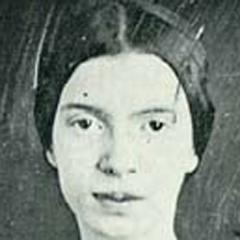
Author

Emily Dickinson
Emily Dickinson

Emily Dickinson was a renowned American poet of the 19th century, known for her unique poetic style and profound introspection. Her poetry is characterized by its concise form and philosophical language, often exploring themes such as life, death, nature, and religion. more

You May Also Like

“You grew up soft. Your tender heart would nurse a frightened field mouse rescued from a trap. Would make a splint. You'd try to help but always it would die. You gave them names. You were a friendless child, a barrel-chested, sturdy little thing who played alone. You grew up soft, but still you learned to hide it. Piece by piece. The world's not built for soft and sturdy things. It likes its soft things small and white, defenceless. Princesses in castles. Maidens waiting for the perfect sword. You grew up soft, and piece by wounded piece you built a carapace around your body. Humans are peculiar little things.”

“He was still so very young. Faeries—true faeries, not their changeling throwaways—live forever, and when you have an eternity of adulthood ahead of you, you linger over childhood. You tend it and keep it close to your heart, because once it ends, it’s over. Quentin was barely fifteen. He’d never seen the Great Hunt that came down every twenty-one years, or been present for the crowning of a King or Queen of Cats, or announced his maturity before the throne of High King Aethlin. He was a child, and he should have had decades left to play; a century of games and joy and edging cautiously toward adulthood. But he didn’t. I could see his childhood dying in his eyes as he looked at me, silently begging me to answer for him.”