Quotessence
Home / Quotes / Quote by John Locke

Quote by John Locke

“Men always forget that human happiness is a disposition of mind and not a condition of circumstances.”

Quote by John Locke

Author
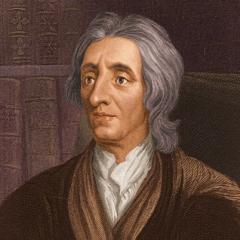
John Locke
John Locke

John Locke (August 29, 1632 - October 28, 1704) was an English philosopher, political theorist, and physician, considered one of the most influential figures of the Enlightenment. His ideas have had a profound impact on political philosophy, ethics, and epistemology. more

You May Also Like

“In England, his views were so completely in harmony with those of most intelligent men that it is difficult to trace their influence except in theoretical philosophy; in France, on the other hand, where they led to an opposition to the existing regime in practice and to the prevailing Cartesianism in theory, they clearly had a considerable effect in shaping the course of events. This is an example of a general principle: a philosophy developed in a politically and economically advanced country, which is, in its birthplace, little more than a clarification and systemization of prevalent opinion, may become elsewhere a source of revolutionary ardour, and ultimately of actual revolution. It is mainly through theorists that the maxims regulating the policy of advanced countries become known to less advanced countries. In the advanced countries, practice inspires theory; in the others, theory inspires practice. This difference is one of the reasons why transplanted ideas are seldom so successful as they were in their native soil.”

“The greatest writers of the Whig party, Burke and Macaulay, constantly represented the statesmen of the Revolution as the legitimate ancestors of modern liberty. It is humiliating to trace a political lineage to Algernon Sidney, who was the paid agent of the French king; to Lord Russell, who opposed religious toleration at least as much as absolute monarchy; to Shaftesbury, who dipped his hands in the innocent blood shed by the perjury of Titus Oates; to Halifax, who insisted that the plot must be supported even if untrue; to Marlborough, who sent his comrades to perish on an expedition which he had betrayed to the French; to Locke, whose notion of liberty involves nothing more spiritual than the security of property, and is consistent with slavery and persecution; or even to Addison, who conceived that the right of voting taxes belonged to no country but his own. Defoe affirms that from the time of Charles II. to that of George I. he never knew a politician who truly held the faith of either party; and the perversity of the statesmen who led the assault against the later Stuarts threw back the cause of progress for a century.”

“Questions and debates related to the distinction between primary and secondary qualities, starting with Galileo, Descartes, Newton, Boyle, and culminating with Locke, Berkeley, and Hume, although we can go back to Democritus and his conventions, arise not only from these qualities per se but also from the lack of clear and precise definitions of these terms, including the terms “sensibles” (“sensible qualities”) and “proper and common sensibles.” For the philosophers of old, since Aristotle, proper sensibles were the same as secondary qualities for the philosophers since Locke. Common sensibles would be primary qualities based on Locke’s classification. The main distinction shall be sought between the essence of the Being as a singularity, in its ultimate mode, and its manifestation, appearance, in and through plurality. We can further postulate that there is a distinction between the essence of singularity and its appearance or manifestation in (through) plurality. The next question is whether Plurality saves the essence of singularity. Although singularity is saved even in plurality, this essence hides beyond appearance, and the senses cannot experience it. The senses experience only the appearance of plurality, not its essence as a singularity.”

“Locke’s distinction between primary qualities of the thing, which he described as solidity, extension, figure, motion or rest, and number, are not primary qualities of the essence of the Ultimate Being as it is but, at best, can only be, conditionally speaking, primary qualities of the manifestation of the Being in things, in plurality. As such, the distinction between the primary and secondary qualities is not between the essence and appearance (reality and appearance) but between the different modes (levels, properties) of appearances.”

“The philosopher John Locke once noted that pursuing happiness is “the foundation of liberty.” This idea is at the core of the Declaration of Independence, the document that gave birth to our nation. The Declaration asserts that each of us is endowed with certain “unalienable Rights,” including “Life, Liberty and the pursuit of Happiness,” and that governments are created for the purpose of protecting these rights. The use of drugs in the pursuit of happiness, in my view, is arguably an act that the government is obliged to safeguard. [So] why is our government arresting hundreds of thousands of Americans each year for using drugs, for pursuing pleasure, for seeking happiness?”

“Jocul, ispravit mereu printr-o cazatura, nu era decat o poveste care anunta viitorul. Asa cum sunt toate jocurile copilariei: marionetele ne arata cat de scurta si de tulburata ne e viata, de-a v-ati ascunselea ne invata cum se cauta emotiile, Inelus-invartecus, cat ai de alergat ca sa-ti indeplinesti dorintele, iar de-a baba oarba, dragostea oarba si dibuitul.”