Quotessence
Home / Quotes / Quote by Ivan Goncharov

Quote by Ivan Goncharov

Work

The Same Old Story

Browse quotes and source details for this work. more
Author

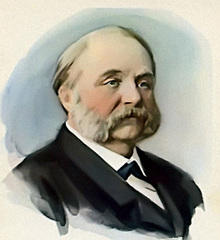
Ivan Goncharov
Ivan Goncharov

Russian realist novelist, born on June 18, 1812, and died on September 27, 1891. Ivan Goncharov is renowned for his delicate psychological portraits and profound insights into the life of Russian society. more

You May Also Like

“The Fool shook his head, smiling. 'No. Dragons are no better than humans. They are little different at all from men. They will hold up a mirror to humanity's selfishness. They will remind you that all your talk of owning this and claiming that is no more than the snarling of a chained dog or a sparrow's challenge song. The reality of those claims lasts but for the instant of its sounding. Name it as you will, claim it as you will, the world does not belong to men. Men belong to the world. You will not own the earth that eventually your body will become, nor will it recall the name it once answered to.”

“Images of suffering are humanizing to all but the hardened fanatic. Watch men die, struggling for dignity, and you cannot deny their humanity. If this is the politics of victimization, then all our impulses of empathy with strangers are the politics of victimization. We learn to care about those who are not like us not when we learn they want the same things we do, but when we learn that they feel pain in the same way we do.”

“People were so oversensitive to the supposed overfishing of sharks. As if it wasn't the height of hubris to decide that humanity needed to be put into the position of custodian to the height of apex predators. God had made man to fight and defeat his other creations. Why else would he have made his chosen children physically weak, but mentally strong? In the battle between man and shark, the shark should always have won. That it didn't, proved only that man was intended to be victorious and that he should be allowed to kill whatever he could before he, in turn, was killed.”

“I think all of us need to do a better job of seeing the humanity of people on the other side of the aisle. Because I think what happens in this country right now is: The left says to the right, “What do you know about pain, white straight man? My pain is real, as an L.G.B.T.Q. person.” And the right says to the left, “What do you know about pain, college-educated, cosmopolitan élite? My pain is real, in a post-industrial community ravaged by the opioid crisis.” And I know that, when I am upset, the worst thing that someone can say to me, even if it is said with the best of intentions, is “It’s not as bad as you think.” Any therapist will tell you that the first step to healing is to have your pain seen and validated. And I think all of us have to do a better job of recognizing that people don’t have to be right in our mind for what they’re facing to be wrong. And people don’t have to be right in our minds for us to try to right that wrong. That comes down to sort of a core recognition that every single person is more than just one thing about them. And every single person is more than even beliefs that might personally hurt many other people.”

“So much of our surprise, our fear, and our vindictiveness when faced with a pest is a result of our own ignorance. When we see a coyote in the street, a rat in our trash can, or a squirrel in the attic, we are at a loss. When we don't know what to do, we feel helpless. Vulnerable. When we realize how helpless we are, shame follows immediately behind. We want the problem—and the animal causing our shame—to go away.”

“Gradually these situations arise, she can see that now, just one step after another, and by the time a few weeks or months have passed, your life is no longer recognizable. You are lying to almost everyone you know. You have come to care passionately, too fully and completely, for an unsuitable person. You can no longer visualize your own future: not only five years from now, but five months, even five weeks. Everything is in disarray. All this for one person, for the relation that exists between you. Your fidelity to the idea of that reason. In the light of that, you have come to hold too loosely many other important things: the respect of your family, the admiration of your colleagues and acquaintances, even the understanding of your closest friends. Life, after all, has not slipped free of its netting, holding people in place, making sense of things. It is not possible to tear away the constraints and simply carry on a senseless existence. People, other people make it impossible. But without other people, there would be no life at all. Judgement, reprisal, disappointment, conflict: these are the means by which people remain connected to one another. Because of Margaret's friends, her former marriage, her family, colleagues, people in town, she is not entirely free to live the limitless spontaneous life that she has imagined for herself. But because of Ivan, because of whatever there is between them, she is, on the other hand, not entirely free to return to her previous existence either. The demands of other people do not dissolve; they only multiply. More and more complex, more difficult. Which is another way, she thinks, of saying: more life, more and more of life.”