Quotessence
Home / Quotes / Quote by George Orwell

Quote by George Orwell

“If the Party could thrust its had into the past and say of this or that event, it never happened-that, surely, was more terrifying than mere torture or death.”

Quote by George Orwell

Book:1984

Work

1984

George Orwell's '1984' is a seminal work of literature that explores themes of government control, individuality, and the erosion of privacy. The story is set in a future where the world is divided into three superstates, each engaged in perpetual war. The protagonist, Winston Smith, works for the Ministry of Truth and is disillusioned with the oppressive regime. The novel delves into the psychological and societal consequences of living under constant surveillance and the struggle for truth and freedom. more
Author

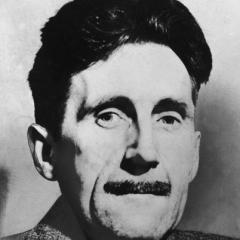
George Orwell
George Orwell

George Orwell, born Eric Arthur Blair, was a British novelist and political critic. Known for his sharp social criticism and profound insights into totalitarianism, Orwell is best remembered for his novels '1984' and 'Animal Farm', which remain influential to this day. more

You May Also Like

“With respect to Stoicism, Hadot has described four features that constitute the universal Stoic attitude. They are, first, the Stoic consciousness of "the fact that no being is alone, but that we make up part of a Whole, constituted by the totality of human beings as well as by the totality of the cosmos"; second, the Stoic "feels absolutely serene, free, and invulnerable to the extent that he has become aware that there is no other evil but moral evil and that the only thing that counts is the purity of moral consciousness"; third, the Stoic "believes in the absolute value of the human person," a belief that is "at the origin of the modern notion of the 'rights of man'"; finally, the Stoic exercises his concentration "on the present instant, which consists, on the one hand, in living as if we were seeing the world for the first and for the last time, and, on the other hand, in being conscious that, in this lived presence of the instant, we have access to the totality of time and of the world." 17 Thus, for Hadot, cosmic consciousness, the purity of moral consciousness, the recognition of the equality and absolute value of human beings, and the concentration on the present instant represent the universal Stoic attitude. The universal Epicurean attitude essentially consists, by way of "a certain discipline and reduction of desires, in returning from pleasures mixed with pain and suffering to the simple and pure pleasure of existing.”