Quotessence
Home / Quotes / Quote by Margaret Mitchell

Quote by Margaret Mitchell

“Why had he gone, stepping off into the dark, into the war, into a Cause that was lost, into a world that was mad? Why had he gone, Rhett who loved the pleasures of women and liquor, the comfort of good food and soft beds, the feel of fine linen and good leather, who hated the South and jeered at the fools who fought for it? Now he had set his varnished boots upon a bitter road where hunger tramped with tireless stride and wounds and weariness and heartbreak ran like yelping wolves. And the end of the road was death. He need not have gone. He was safe, rich, comfortable. But he had gone, leaving her alone in a night as black as blindness, with the Yankee Army between her and home.”

Quote by Margaret Mitchell

Work

Gone with the wind

Margaret Mitchell's 'Gone with the Wind' is a sweeping historical romance that follows the adventures of Scarlett O'Hara, a headstrong and ambitious woman living in the American South. The story spans the tumultuous years of the Civil War and the subsequent Reconstruction era, capturing the social and political changes that reshape the lives of its characters. Known for its vivid portrayal of the antebellum South and its characters, the novel has become a staple of American literature. more

Author

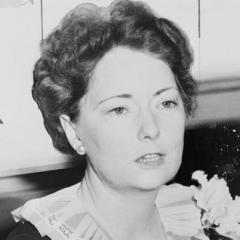
Margaret Mitchell
Margaret Mitchell

Margaret Mitchell, an American author born on November 8, 1900, and died on August 16, 1949, is best known for her novel 'Gone with the Wind'. This historical novel, set against the backdrop of the American Civil War and Reconstruction, has won the hearts of readers worldwide. more

You May Also Like

“What is that statue?" I asked. "A Civil War general--probably Lee's," Amzie said. "What else is on the courthouse lawn?" The statue stood on one side of the entrance and a beautiful tree on the other. "What kind of tree is that?" I asked. "I don't know for sure," Amzie replied, "but I think it's an oak. Big, ain't it? Strong, too. Been there a long time." For a moment he sat still and full of thoughts. "Let's look around town," I said. "Wait," he replied. "You just gave me a thought. There's a picture of the South if I ever saw one. That Southern general and that tree. One is the dead past and the other the living present. This South is sure caught in between--between life and death.”

“These women, so swift to kindness, so tender to the sorrowing, so untiring in times of stress, could be as implacable as furies to any renegade who broke one small law of their unwritten code. This code was simple. Reverence for the Confederacy, honor to the veterans, loyalty to old forms, pride in poverty, open hands to friends and undying hatred to Yankees. Between them, Scarlett and Rhett had outraged every tenet of this code.”

“The Confederate flag stopped flying as the pennant of reconciliation, the joining of the southern military tradition to northern establishment might to spread Americanism abroad. It now was the banner of those who felt that the establishment had sacrificed that tradition, "stabbed it in the back." The battle flag became the banner not of a specific Lost Cause but of all of white supremacy's lost causes.”

“There are former Confederates who sought to redeem themselves—one thinks of James Longstreet, wrongly blamed by Lost Causers for Lee’s disastrous defeat at Gettysburg, who went from fighting the Union army to leading New Orleans’s integrated police force in battle against white-supremacist paramilitaries. But there are no statues of Longstreet in New Orleans. Lee was devoted to defending the principle of white supremacy; Longstreet was not. This, perhaps, is why Lee was placed atop the largest Confederate monument at Gettysburg in 1917, but the 6-foot-2-inch Longstreet had to wait until 1998 to receive a smaller-scale statue hidden in the woods that makes him look like a hobbit riding a donkey. It’s why Lee is remembered as a hero, and Longstreet is remembered as a disgrace.”

“Besides the moral courage required to accept commissions in the Fifty-fourth at the time it was organizing, physical courage was also necessary, for the Confederate Congress, on May 1, 1863, passed an act, a potion of which read as follow: - Section IV. That every white person being a commissioned officer, or acting as such, who, during the present war, shall command negroes or mulattoes in arms against the Confederate States, or who shall arm, train, organize, or prepare negroes or mulattoes for military service against the Confederate States, or who shall voluntarily aid negroes or mulattoes in any military enterprise, attack, or conflict in such service, shall be deemed as inciting servile insurrection, and shall, if captured, be put to death or be otherwise punished at the discretion of the Court.”

“None of this means of course that Robert E. Lee wasn't influenced by his father, or didn't inherit some of his better characteristics. Like Henry Lee, Robert was tall, physically strong, a born horseman and soldier, and so courageous that even his own soldiers often begged him to get back out of range, in vain of course. He had his father's gift for the sudden flank attack that would throw the enemy off balance, and also his father's ability to inspire loyalty--and in Robert's case, virtual worship--in his men. On the other hand, perhaps because of Henry Lee's quarrels with Jefferson and Madison, Robert had an ingrained distrust of politics and politicians, including those of the Confederacy. But the most important trait that influenced Robert was a negative one: his father had been voluble, imprudent, fond of gossip, hot-tempered, and quick to attack anybody who offended or disagreed with him. With Henry Lee, even minor differences of opinions escalated quickly into public feuds. Robert was, or forced himself to be, exactly the opposite. He kept the firmest possible rein on his temper, he avoided personal confrontations of every kind, and he disliked arguments. These characteristics, normally thought of as virtues, became in fact Robert E. Lee's Achilles' heel, the one weak point in his otherwise admirable personality, and a dangerous flaw for a commander, perhaps even a flaw that would, in the end, prove fatal for the Confederacy. Some of the most mistaken military decisions in the short history of the Confederacy can be attributed to Lee's reluctance to confront a subordinate and have it out with him on the spot, face to face.”

“A billionaire plutocrat is now sitting in the White House. Democracy has been overthrown. A right wing coup d’état has taken place. The Confederacy has defeated the Union. Racist Nazis are now running America, calling themselves “patriots”. They are the enemies of the People, the enemies of America, and the enemies of the world. We need to reboot the world.”