Quotessence
Home / Quotes / Quote by John Hope Franklin

Quote by John Hope Franklin

“[The South's] obsession was to maintain a government, an economy, an arrangement of the sexes, a relationship of the races, and a social system that had never existed...except in the fertile imagination of those who would not confront either the reality that existed or the change that would bring them closer to reality.”

Quote by John Hope Franklin

Author
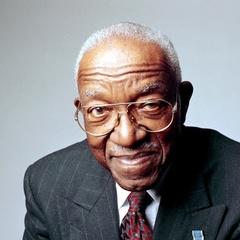
John Hope Franklin
John Hope Franklin

John Hope Franklin was an American historian renowned for his contributions to the study of African American history and the history of the American South. His extensive career, spanning over five decades, saw the publication of numerous influential books and articles. Franklin was a prominent figure in the field of history and a leading proponent for the study of African American history. more

You May Also Like

“Besides the moral courage required to accept commissions in the Fifty-fourth at the time it was organizing, physical courage was also necessary, for the Confederate Congress, on May 1, 1863, passed an act, a potion of which read as follow: - Section IV. That every white person being a commissioned officer, or acting as such, who, during the present war, shall command negroes or mulattoes in arms against the Confederate States, or who shall arm, train, organize, or prepare negroes or mulattoes for military service against the Confederate States, or who shall voluntarily aid negroes or mulattoes in any military enterprise, attack, or conflict in such service, shall be deemed as inciting servile insurrection, and shall, if captured, be put to death or be otherwise punished at the discretion of the Court.”

“None of this means of course that Robert E. Lee wasn't influenced by his father, or didn't inherit some of his better characteristics. Like Henry Lee, Robert was tall, physically strong, a born horseman and soldier, and so courageous that even his own soldiers often begged him to get back out of range, in vain of course. He had his father's gift for the sudden flank attack that would throw the enemy off balance, and also his father's ability to inspire loyalty--and in Robert's case, virtual worship--in his men. On the other hand, perhaps because of Henry Lee's quarrels with Jefferson and Madison, Robert had an ingrained distrust of politics and politicians, including those of the Confederacy. But the most important trait that influenced Robert was a negative one: his father had been voluble, imprudent, fond of gossip, hot-tempered, and quick to attack anybody who offended or disagreed with him. With Henry Lee, even minor differences of opinions escalated quickly into public feuds. Robert was, or forced himself to be, exactly the opposite. He kept the firmest possible rein on his temper, he avoided personal confrontations of every kind, and he disliked arguments. These characteristics, normally thought of as virtues, became in fact Robert E. Lee's Achilles' heel, the one weak point in his otherwise admirable personality, and a dangerous flaw for a commander, perhaps even a flaw that would, in the end, prove fatal for the Confederacy. Some of the most mistaken military decisions in the short history of the Confederacy can be attributed to Lee's reluctance to confront a subordinate and have it out with him on the spot, face to face.”

“A billionaire plutocrat is now sitting in the White House. Democracy has been overthrown. A right wing coup d’état has taken place. The Confederacy has defeated the Union. Racist Nazis are now running America, calling themselves “patriots”. They are the enemies of the People, the enemies of America, and the enemies of the world. We need to reboot the world.”

“The overseas frontier—wars in Cuba, the Dominican Republic, the Philippines, Nicaragua, and Haiti—acted as a prism, refracting the color line abroad back home. In each military occupation and prolonged counterinsurgency they fought, southerners could replay the dissonance of the Confederacy again and again. They could fight in the name of the loftiest ideals—liberty, valor, self-sacrifice, camaraderie—while putting down people of color.”

“A writer is never alone, he is always with himself”

“Memorial Day has the tendency to conjure up old arguments about the Civil War. That’s understandable; it was created to mourn the dead of a war in which the Union was nearly destroyed, when half the country rose up in rebellion in defense of slavery.”

“White Southerners' commitment to the Confederate cause was not predicated on whether or not they owned slaves. The commitment was based on a desire to maintain a society in which Black people remained at the bottom of the social hierarchy.”

“The students on campuses with such a [Confederate] statue had higher levels of implicit racial bias. This finding speaks to the haunting effects of historical expressions of racism. Not only do these statues cause pain for many black students and faculty; they may help to sustain implicit anti-black bias.”