Quotessence
Home / Quotes / Quote by Alexis de Tocqueville

Quote by Alexis de Tocqueville

“These diverse effects of slavery and freedom are easily understood: … the men in Kentucky [neither] have zeal nor enlightenment … cross over into Ohio in order to utilize their industry and to be able to exercise it without shame … in Kentucky, masters make slaves work without being obliged to pay them, but they receive little fruit from their efforts, while the money that they would give to free workers would be recovered with interest from the value of their labors.”

Quote by Alexis de Tocqueville

Author
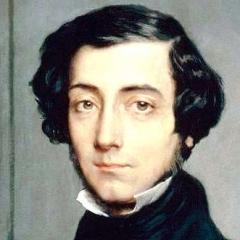
Alexis de Tocqueville

Alexis de Tocqueville was a French historian and political theorist renowned for his seminal work 'Democracy in America'. He embarked on a journey to the United States in the 1830s to examine its democratic institutions, and his observations were compiled into a two-volume book that remains a cornerstone in the study of American democracy and political science. more

You May Also Like

“I pity from the bottom of my heart any nation or body of people that is so unfortunate as to get entangled in the net of slavery. I have long since ceased to cherish any spirit of bitterness against the Southern white people on account of the enslavement of my race. No one section of our country was wholly responsible for its introduction, and, besides, it was recognized and protected for years by the General Government. Having once got its tentacles fastened on to the economic and social life of the Republic, it was no easy matter for the country to relieve itself of the institution.”

“When Colonel Lloyd's slaves met the slaves of Jacob Jepson, they seldom parted without a quarrel about their masters; Colonel Lloyd's slaves contending that he was the richest, and Mr. Jepson's slaves that he was the smartest, and most of a man...These quarrels would almost always end in a fight between the parties...They seemed to think that the greatness of their masters was transferable to themselves. It was considered as being bad enough to be a slave; but to be a poor man's slave was deemed a disgrace indeed!”

“While I lived with my master in St. Michael's, there was a white young man, a Mr. Wilson, who proposed to keep a Sabbath school for the instruction of such slaves as might be disposed to learn to read the New Testament. We met but three times, when Mr. West and Mr. Fairbanks, both class-leaders, with many others, came upon us with sticks and other missiles, drove us off, and forbade us to meet again. Thus ended our little Sabbath school in the pious town of St. Michael's.”

“Of my father I know even less than of my mother. I do not even know his name. I have heard reports to the effect that he was a white man who lived on one of the near-by plantations. Whoever he was, I never heard of his taking the least interest in me or providing in any way for my rearing. But I do not find especial fault with him. He was simply another unfortunate victim of the institution which the Nation unhappily had engrafted upon it at that time.”

“The need for the amendment was obvious. Of the nation’s four million slaves at the outset of the war, no more than five hundred thousand were now [15 June 1854] free, and, to his disgust, many white Americans intended to have them reenslaved once the war was over.”

“Do you as Germans feel any guilt for what the Germans did?’ he will ask them. They will go off into groups and have heated discussions among themselves, and then come back to him with their thoughts. ‘Yes, we are Germans, and Germans perpetrated this,’ some students once told him, echoing what others have said. ‘And, though it wasn’t just Germans, it is the older Germans who were here who should feel guilt. We were not here. We ourselves did not do this. But we do feel that, as the younger generation, we should acknowledge and accept the responsibility. And for the generations that come after us, we should be the guardians of the truth.”