Quotessence
Home / Quotes / Quote by Daniel Odier

Quote by Daniel Odier

“One day, I asked her what distinction she made between the Tantric Shivaic teaching, which sees consciousness as the receptacle of the universe, and Tantric Buddhism, which rejects consciousness as an illusory form. It was the debate between the Self and the Selfless that had mobilized great energies and had been the subject of polemics and councils, and grounds for mutual condemnation and rivalry”

Quote by Daniel Odier

Work

Tantric Quest: An Encounter with Absolute Love

This book delves into the rich tradition of Tantra, examining its philosophical underpinnings and the transformative journey towards achieving absolute love. more

Author
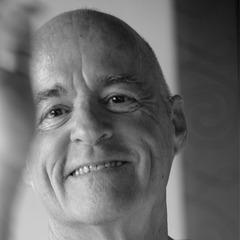
Daniel Odier
Daniel Odier

Daniel Odier, born on May 17, 1945, is a renowned French author. His works span across various genres including novels, poetry, and drama, and he is known for his unique literary style and profound insights into human nature. more

You May Also Like

“The local seers, the rshi, easily identifiable by their dreadlocks or matted hair, and being dressed in nothing but bark. They filled their days in meditation or uttering mantras to find spiritual release. In the early mornings, these rshi walked to the villages in the valley to collect rice, betelnuts and vegetables the villagers shared with them because, after all, the spiritual welfare of the whole valley depended on these devout worshippers.  They continued through forests of lush foliage that protected them from the beating sun. Later, when the sun lost its strength, Prapanca and his two servants followed a narrow, steep path into the hills. They were getting closer”

“Over the years I have had much occasion to ponder this word, the intelligentsia. We are all very fond of including ourselves in it—but you see not all of us belong. In the Soviet Union this word has acquired a completely distorted meaning. They began to classify among the intelligentsia all those who don't work (and are afraid to) with their hands. All the Party, government, military, and trade union bureaucrats have been included. All bookkeepers and accountants—the mechanical slaves of Debit. All office employees. And with even greater ease we include here all teachers (even those who are no more than talking textbooks and have neither independent knowledge nor an independent view of education). All physicians, including those capable only of making doodles on the patients' case histories. And without the slightest hesitation all those who are only in the vicinity of editorial offices, publishing houses, cinema studios, and philharmonic orchestras are included here, not even to mention those who actually get published, make films, or pull a fiddle bow. And yet the truth is that not one of these criteria permits a person to be classified in the intelligentsia. If we do not want to lose this concept, we must not devalue it. The intellectual is not defined by professional pursuit and type of occupation. Nor are good upbringing and good family enough in themselves to produce and intellectual. An intellectual is a person whose interests in and preoccupation with the spiritual side of life are insistent and constant and not forced by external circumstances, even flying in the face of them. An intellectual is a person whose thought is nonimitative.”

“Nor were the intellectuals of the 1920s a vanguard of a new outlook, as they themselves supposed, but the exhausted rearguard of Victorian romanticism. They sought refuge from an industrialised and ugly world. Some, like Virginia Woolf, found it in polishing up an exquisite sensibility. Others, like her husband Leonard Woolf and of course Gilbert Murray, found escape in designing an ideal society...It was a sheltered world, this of the intelligentsia of the 1920s, its inhabitants mostly shielded by private means from crude personal reminders of the outside struggle for survival. They circulated at leisure from country house to country cottage...back again to Bloomsbury or one of the ancient universities; convinced that they carried in their luggage the soul of civilisation. The memoirs of the epoch are fragrant with cultured weekends - witty chat on the lawn and brilliant profundity at the dining table. It was a circle of flimsy and precious people, of whom Lady Ottoline Morrell was perhaps the manliest. And so, while not all intellectuals were active pacifists or internationalists, they were generally more concerned with classical French and Greek culture - 'the good life' - than with 'Philistine' matters like industrial and strategic power.”

“On the edge conversations with my son. My son (the one who can't easily decide) asked me in a positive note, "Mommy how can you be fearless and decide easily." To which I carefully replied: "It's not that I am without fear. In fact, after having you - I have a lot. Nothing is easy when you don't really know what you want. But if you truly do want things to happen, your fears will be overshadowed by making your dreams come true. Just make one step at a time and with each step the shadows of doubt and fear will fall behind you." "But Mommy, how do you know which decision to make?" "I don't always know. This or that, no matter which side I take, no one really knows what awaits so I take whatever I feel is right for me and the people who will be directly affected by my decisions. Nevertheless, I have guidelines that I live by: BTS. Believe in luck but work hard, Trust yourself that you can handle anything and Show respect to the people who will be directly affected by your choices.”