Quotessence
Home / Quotes / Quote by Samuel Beckett

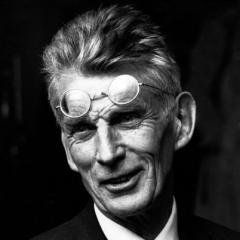
Quote by Samuel Beckett

“POZZO: I woke up one fine day as blind as Fortune. Sometimes I wonder if I'm not still asleep. VLADIMIR: And when was that? POZZO: I don't know. VLADIMIR: But no later than yesterday— POZZO: Don't question me! The blind have no notion of time . The things of time are hidden from them too. VLADIMIR: Well just fancy that! I could have sworn it was just the opposite.”

Quote by Samuel Beckett

Work

Waiting for Godot

Browse quotes and source details for this work. more

Author

Samuel Beckett
Samuel Beckett

Samuel Beckett was an Irish novelist, playwright, and poet, widely regarded as one of the most influential writers of the 20th century. His works are characterized by their minimalist style, existential themes, and use of language. His most famous works include 'Waiting for Godot' and 'Molloy'. Beckett was awarded the Nobel Prize in Literature in 1969. more

You May Also Like

“Typhus was raging and even some at the Danish consulate were infected.... The pharmacies, running out of medicines, sold Orthodox amulets, and people were instructed to tie their sleeves tightly at the wrist so as to prevent lice from creeping in. Former ladies-in-waiting were sleeping on the floor, with eleven former aristocrats sharing one room. A feeling of doom was spreading all over the city, like typhus itself.”

“Ništa nije proučavao tako kao to lice i ni u što nije polagao takve nade (iako je to zahtijevalo priličan napor) kao u to lice. Bilo je slično majčinu ali, kako je Jaromil bio muškarac, finoća crta bila je mnogo upadljivija - imao je lijepo oblikovan malen nos i sitnu, neznatno uvučenu bradu. Ta ga je brada mučila najviše jer je pročitao poznatu Schopenhauerovu tvrdnju da je unazad povučena brada odvratna, jer se čovjek razlikuje od majmuna upravo po izbačenoj bradi. Onda je negdje pronašao Rilkeovu sliku i ustanovio da je i on imao uvučenu bradu; to mu je pružilo utjehu i poticaj. Dugo je promatrao svoju sliku u ogledalu očajnički se koprcajući u golemu prostranstvu između majmuna i Rilkea.”