“Once more, the joyful character of the eucharistic gathering must be stressed. For the medieval emphasis on the cross, while not a wrong one, is certainly one-sided. The liturgy is, before everything else, the joyous gathering of those who are to meet the risen Lord and to enter with him into the bridal chamber. And it is this joy of expectation and this expectation of joy that are expressed in singing and ritual, in vestments and in censing, in that whole 'beauty' of the liturgy which has so often been denounced as unnecessary and even sinful. Unnecessary it is indeed, for we are beyond the categories of the 'necessary.' Beauty is never 'necessary,' 'functional' or 'useful.' And when, expecting someone whom we love, we put a beautiful tablecloth on the table and decorate it with candles and flowers, we do all this not out of necessity, but out of love. And the Church is love, expectation and joy.”
Quote by Alexander Schmemann
Work
Written by an expert in Orthodox theology, 'For the Life of the World: Sacraments and Orthodoxy' delves into the historical and theological foundations of sacraments within the Orthodox tradition. The book examines various sacraments, their rituals, and their spiritual implications, providing a comprehensive understanding of their importance in the faith. more
Author
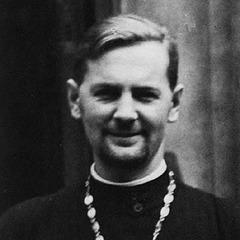
Alexander Schmemann was a prominent Orthodox theologian and writer, born on September 13, 1921, and died on December 13, 1983. He had a profound impact on the field of Orthodox theology with his deep understanding of Christian doctrine and history. more
You May Also Like
“We’re all a little broken.” Quiet. Potent. “No one goes through life with a whole heart.”
“One of the signs of insanity is the belief that life after death matters more than life on Earth!”