Quotessence
Home / Quotes / Quote by Blaise Pascal

Quote by Blaise Pascal

“Symmetry is what we see at a glance; based on the fact that there is no reason for any difference, and based also on the face of man; whence it happens that symmetry is only wanted in breadth, not in height or depth.”
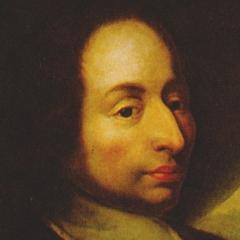
Quote by Blaise Pascal

Work

Pensées

Pensées is a collection of Pascal's thoughts and reflections on various philosophical, religious, and scientific topics. more

Author

Blaise Pascal
Blaise Pascal

Blaise Pascal was a French mathematician, physicist, philosopher, and theologian. He was born on June 19, 1623, and died on August 19, 1662. Pascal's contributions to mathematics were particularly significant, with groundbreaking work in probability theory, analytical geometry, and early calculus. more

You May Also Like

“The deep question is: Why does nature embody so much symmetry? We do not know the full answer to this question. However, we have some partial answers. Symmetry leads to economy, and nature, like human beings, seems to prefer economy. If we think of nature as a vast ongoing experiment, constantly trying out different possibilities of design, then those designs that cost the least energy or that require the fewest different parts to come together at the right time will take precedence, just as the principle of natural selection says that organisms with the best ability to survive will dominate over time. One physical principle that governs nature over and over is the “energy principle”: nature evolves to minimize energy.”

“The pleasure of this kind of narrative is not that we think we are reading about the real world (although the story usually does map onto our world fairly closely), but rather that the wings of symmetry are unfolding around us; briefly we are on a planet where, as E.M. Forster says, there are no secrets and human behavior makes sense. I call this 'fiction.”

“The first law is essentially based on the conservation of energy, the fact that energy can be neither created nor destroyed. Conservation laws—laws that state that a certain property does not change—have a very deep origin, which is one reason why scientists, and thermodynamicists in particular, get so excited when nothing happens. There is a celebrated theorem, Noether’s theorem, proposed by the German mathematician Emmy Noether (1882–1935), which states that to every conservation law there corresponds a symmetry. Thus, conservation laws are based on various aspects of the shape of the universe we inhabit. In the particular case of the conservation of energy, the symmetry is that of the shape of time. Energy is conserved because time is uniform: time flows steadily, it does not bunch up and run faster then spread out and run slowly. Time is a uniformly structured coordinate. If time were to bunch up and spread out, energy would not be conserved. Thus, the first law of thermodynamics is based on a very deep aspect of our universe and the early thermodynamicists were unwittingly probing its shape.”

“I fought angrily against seeing particular types of poetic organization because it seemed awful to see my own life and these actual events in that way. But when you put forth an intention into the universe to speak a certain truth and narrate a certain period of your life, you start to see the sorts of symmetries that you are not usually supposed to be able to see until you are on your deathbed and your life flashes before your eyes. And you see exactly why everything happened. And even the most painful things you’ve ever been through can seem unbearably beautiful.”