Quotessence
Home / Quotes / Quote by Sylvia Plath

Quote by Sylvia Plath

“The night sky is only a sort of carbon paper, Blueblack, with the much-poked periods of stars Letting in the light, peephole after peephole--- A bonewhite light, like death, behind all things. --from "Insomniac", written April 1961”

Quote by Sylvia Plath

Work

The Collected Poems

This book encompasses a wide range of poetic works, showcasing the author's diverse styles and themes throughout their career. more

Author

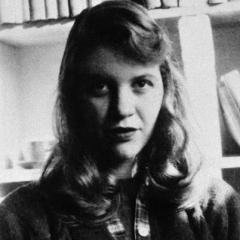
Sylvia Plath
Sylvia Plath

American poet, novelist, and playwright. Her works are known for their profound emotion and unique style, and she is considered one of the most important female writers of the 20th century. more

You May Also Like

“For a long time I took a purely theological standpoint on the issue, which is actually so fundamental that it can be used as a springboard for any debate – if environment is the operative factor, for example, if man at the outset is both equal and shapeable and the good man can be shaped by engineering his surroundings, hence my parents’ generation’s belief in the state, the education system and politics, hence their desire to reject everything that had been and hence their new truth, which is not found within man’s inner being, in his detached uniqueness, but on the contrary in areas external to his intrinsic self, in the universal and collective, perhaps expressed in its clearest form by Dag Solstad, who has always been the chronicler of his age, in a text from 1969 containing his famous statement “We won’t give the coffee pot wings”: out with spirituality, out with feeling, in with the new materialism, but it never struck them that the same attitude could lie behind the demolition of old parts of town to make way for roads and parking lots, which naturally the intellectual Left opposed, and perhaps it has not been possible to be aware of this until now when the link between the idea of equality and capitalism, the welfare state and liberalism, Marxist materialism and the consumer society is obvious because the biggest equality creator of all is money, it levels all differences, and if your character and your fate are entities that can be shaped, money is the most natural shaper, and this gives rise to the fascinating phenomena whereby crowds of people assert their individuality and originality by shopping in an identical way while those who ushered all this in with their affirmation of equality, their emphasis on material values and belief in change, are now inveighing against their own handiwork, which they believed the enemy created, but like all simple reasoning this is not wholly true either, life is not a mathematical quantity, it has no theory, only practice, and though it is tempting to understand a generation’s radical rethink of society as being based on its view of the relationship between heredity and environment, this temptation is literary and consists more in the pleasure of speculating, that is, of weaving one’s thoughts through the most disparate areas of human activity, than in the pleasure of proclaiming the truth.”

“- За гроші, Маркусе, можна купити будь-які почуття, крім справжніх. Гроші можуть створити ілюзію, наче ти щпсливий, хоча насправді це не так, наче тебе люблять, хоча насправді ніхто тебе не любить. За гроші можна купити дім, але не спокій у себе вдома.”