“There could be something wrong with me because I see Negroes neither better nor worse than any other race. Race pride is a luxury I cannot afford. There are too many implications bend the term. Now, suppose a Negro does something really magnificent, and I glory, not in the benefit to mankind, but the fact that the doer was a Negro. Must I not also go hang my head in shame when a member of my race does something execrable? If I glory, then the obligation is laid upon me to blush also. I do glory when a Negro does something fine, I gloat because he or she has done a fine thing, but not because he was a Negro. That is incidental and accidental. It is the human achievement which I honor. I execrate a foul act of a Negro but again not on the grounds that the doer was a Negro, but because it was foul. A member of my race just happened to be the fouler of humanity. In other words, I know that I cannot accept responsibility for thirteen million people. Every tub must sit on its own bottom regardless. So 'Race Pride' in me had to go. And anyway, why should I be proud to be Negro? Why should anyone be proud to be white? Or yellow? Or red? After all, the word 'race' is a loose classification of physical characteristics. I tells nothing about the insides of people. Pointing a achievements tells nothing either. Races have never done anything. What seems race achievement is the work of individuals. The white race did not go into a laboratory and invent incandescent light. That was Edison. The Jews did not work out Relativity. That was Einstein. The Negros did not find out the inner secrets of peanuts and sweet potatoes, nor the secret of the development of the egg. That wad Carver and Just. If you are under the impression that every white man is Edison, just look around a bit. If you have the idea that every Negro is a Carver, you had better take off plenty of time to do your searching.”
Quote by Zora Neale Hurston
Work
Dust Tracks on a Road is a candid and evocative memoir that chronicles the author's upbringing in the rural South during the early 20th century. The narrative delves into Hurston's personal journey, exploring themes of identity, race, and cultural heritage through her own life story. more
Author
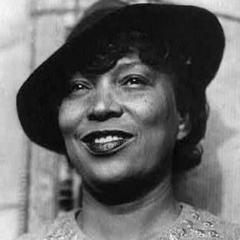
Zora Neale Hurston (1891-1960) was an American anthropologist, folklorist, and novelist who played a pivotal role in the Harlem Renaissance. Born in Alabama and raised in Eatonville, Florida, she became the first African American student at Barnard College, Columbia University, studying under Franz Boas. Hurston is best known for her novel "Their Eyes Were Watching God," now considered a classic of American literature. She conducted extensive anthropological fieldwork in the American South and Caribbean, preserving African American folk traditions. Though largely forgotten after her death, her work was revived by Alice Walker in the 1970s, establishing her as a foundational figure in African American literature and anthropology. more
You May Also Like
“Much to the confusion of small-minded people, confidence does not equate arrogance.”
“Everybody is different, and every body is different.”