Quotessence
Home / Quotes / Quote by Theodore Roosevelt

Quote by Theodore Roosevelt

“Patriotism,” said Theodore Roosevelt, “means to stand by the country. It does not mean to stand by the President or any other public official save exactly to the degree in which he himself stands by the country. … Every man,” said President Roosevelt, “who parrots the cry of ‘stand by the President’ without adding the proviso ‘so far as he serves the Republic’ takes an attitude as essentially unmanly as that of any Stuart royalist who championed the doctrine that the King could do no wrong. No self-respecting and intelligent free man could take such an attitude.”

Quote by Theodore Roosevelt

Author
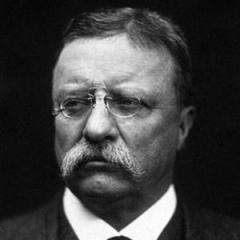
Theodore Roosevelt
Theodore Roosevelt

Theodore Roosevelt was the 26th President of the United States, serving from 1901 to 1909. A progressive leader, he is known for his advocacy of the conservation movement, expansion of federal government regulation, and efforts to improve the lives of American citizens. more

You May Also Like

“The student’s biggest problem was a slave mentality which had been built into him by years of carrot-and- whip grading, a mule mentality which said, "If you don’t whip me, I won’t work." He didn’t get whipped. He didn’t work. And the cart of civilization, which he supposedly was being trained to pull, was just going to have to creak along a little slower without him. This is a tragedy, however, only if you presume that the cart of civilization, "the system," is pulled by mules. This is a common, vocational, "location" point of view, but it’s not the Church attitude. The Church attitude is that civilization, or "the system" or "society" or whatever you want to call it, is best served not by mules but by free men. The purpose of abolishing grades and degrees is not to punish mules or to get rid of them but to provide an environment in which that mule can turn into a free man.”

“Kessler depicts his developing intimacy with a handful of dairy goats and offers an enviable glimpse of the pastoral good life. Yet he also cautions, "Wherever the notion of paradise exists, so does the idea that it was lost. Paradise is always in the past." The title Goat Song is a literal rendering of the Greek word traghoudhia, tragedy. Reading it, I was reminded of Leo Marx's analysis of Thoreau's Walden. In The Machine in the Garden, Marx names Thoreau a tragic, if complex pastoralist. After failing to make an agrarian living raising beans for commercial trade (although his intent was always more allegorical than pecuniary), Thoreau ends Walden by replacing the pastoral idea where it originated: in literature. Paradise, Marx concludes, is not ultimately to be found at Walden Pond; it is to be found in the pages of Walden.”