Quotessence
Home / Quotes / Quote by Ivan Illich

Quote by Ivan Illich

“P4- no amount of dollars can remove the inherent destructiveness off welfare institutions once the professional hierarchies off these have convinced society that their ministrations are morally necessary.”

Quote by Ivan Illich

Author
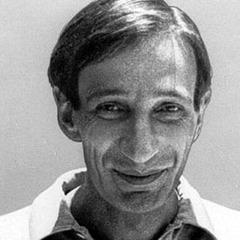
Ivan Illich
Ivan Illich

Ivan Illich, born on September 4, 1926 and died on December 2, 2002, was a renowned philosopher. His research focused on the fields of education, technology, and social criticism, reflecting deeply on modern society. more

You May Also Like

“Now there is an attempt to reverse the history, to go back to the happy days when the principles of economic rationalism briefly reigned, gravely demonstrating that people have no rights beyond what they can gain in the labor market. And since now the injunction to "go somewhere else" won't work, the choices are narrowed to the workhouse prison or starvation, as a matter of natural law, which reveals that any attempt to help the poor only harms them—the poor, that is; the rich are miraculously helped thereby, as when state power intervenes to bail our investors after the collapse of the highly-toured Mexican "economic miracle," or to save failing banks and industries, or to bar Japan from American markets to allow domestic corporations to reconstruct the steel, automotive, and electronics industry in the 1980s (amidst impressive rhetoric about free markets by the most protectionist administration in the postwar era and its acolytes). And far more; this is the merest icing on the cake. But the rest are subject to the iron principles of economic rationalism, now sometimes called "tough love" by those who allocate the benefits.”

“If almost everyone is in favor of feeding the hungry, the politician may find it in his interest to do so. But, under those circumstances, the politician is unnecessary: some kind soul will give the hungry man a meal anyway. If the great majority is against the hungry man, some kind soul among the minority still may feed him—the politician will not.”

“For the Neverland is always more or less an island, with astonishing splashes of colour here and there, and coral reefs and rakish-looking craft in the offing, and savages and lonely lairs. It would be an easy map if that were all; but there is also first day at school, religion, fathers, the round pond, needlework, murders, hangings, verbs that take the dative... and either these are part of the island, or they are another map showing through, and it is all rather confusing, especially as nothing will stand still.”

“This is not necessarily true, however, of measures merely restricting the allowed methods of production, so long as these restrictions affect all potential producers equally and are not used as an indirect way of controlling prices and quantities. Though all such controls of the methods of production impose extra costs (i.e., make it necessary to use more resources to produce a given output), they may be well worth while. To prohibit the use of certain poisonous substances or to require special precautions in their use, to limit working hours or to require certain sanitary arrangements, is fully compatible with the preservation of competition. The only question here is whether in the particular instance the advantages gained are greater than the social costs which they impose. Nor is the preservation of competition incompatible with an extensive system of social services — so long as the organization of these services is not designed in such a way as to make competition ineffective over wide fields.”

“When an "evil" becomes customary, it tends to lose the negative value put on it and in men's minds tends to become a "good." And so, we hear much these days in praise of the very kind of government which the Founding Fathers tried to prevent by their blueprint; that is, of a paternalistic establishment ruling for and over a subject people. A virtue has been made of what was once considered a vice. This transmutation of political values has been accompanied by a transmutation of moral values, as a matter of necessity; people who have no rights are presumably without free will; at least, there is no call for the exercise of free will (as in the case of a slave) when a paternalistic government assumes the obligations of living. Why, for instance, should one be charitable when the government provides for the incompetent or the unfortunate? Why should one be honest when all that is necessary to "get by" is to obey the law? Why should one give thought to one's future when the matter can be left to a munificent government? And, with the government providing "free" schooling, including "free" lunches, even the parents' obligations to their children can be sloughed off.”

“First of all, the National Health Service, the Welfare State. What pride in it, what elation – and what confidence! The best thing was still the young doctors setting up group practices. Most but not all were socialists of various kinds. Memories of the thirties were close, documented by The Stars Look Down, Love on the Dole, The Citadel, novels which everyone had read. Whole families could be brought low because of the illness of one member. That terrible poverty in the 1930s, that cruel indifference to suffering on the part of Britain’s rulers – but now there was the welfare state. Pensions meant old age was no longer a threat. (Forty years later a government can say blandly, But we can’t afford it – and cut benefits that the citizens imagined they had been paying for. Has anyone ever thought of suing a government that reneges on its promises?”

“The market economy is not everything. It must find its place in a higher order of things which is not ruled by supply and demand, free prices, and competition. It must be firmly contained within an all-embracing order of society in which the imperfections of and harshness of economic freedom are corrected by law and in which man is not denied conditions of life appropriate to his nature.”