Quotessence
Home / Quotes / Quote by David Levithan

Quote by David Levithan

“When they can hear each other over the wind and the music, they speak Connecticut: I will not Stamford this type of behavior. What’s Groton into you? What did Danbury his Hartford? New Haven can wait. Darien’t no place I’d rather I’d rather be.”

Quote by David Levithan

Work

Are We There Yet?

This title appears across multiple books in different genres, most commonly in travel narratives chronicling road trips and journeys, as well as in children's literature where the phrase is popular for its relatable, impatient tone. The question 'Are We There Yet?' has become synonymous with travel and the anticipation of reaching a destination, making it a frequently used title in the publishing world. Due to the common nature of this phrase, specific editions or authors cannot be identified without additional context. more

Author

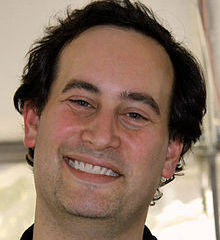
David Levithan
David Levithan

David Levithan, born on September 7, 1972, is a renowned author from the United States. His works span across various genres including young adult literature, adult fiction, and non-fiction, known for his unique narrative style and profound insights into social issues. more

You May Also Like

“Explaining the Jews in a Catholic school when you’re Irish is like having to explain your country’s foreign policy while on a vacation in France. You don’t know what you’re talking about and no matter what you say, they’re not going to like it anyway.”

“My first and lasting impression of the Connecticut River Valley is its serene beauty, especially in the autumn months. Deep River was a near picture-perfect New England village. When I arrived there, the town was a typical working-class place, nothing like the trendy upper-income enclave it became. The town center had a cluster of shops, a movie theater open only on weekends, several white-steepled churches (none of them Catholic), the town hall, and a Victorian library. It was small, even by Ansonia standards.”

“[A 2009 study of the Connecticut Development Agency found that companies receiving tax incentives] had created only 9 percent of the jobs they had forecast. The average subsidy for each new job: $367,910.”

“It was over 50 years ago that I had the privilege of being the Class Advisor to the class of 1969 at what was then called Henry Abbott Regional Vocational Technical School. It was another era and a time when we as a nation stood tall. It was the year when Buzz Aldrin, Neil Armstrong and Michael Collins lifted off from Cape Kennedy, for the first manned landing on the Moon. “One small step for man, one giant leap for mankind.” It was a time when we felt proud to be Americans! Fifty years ago the 4 Beatles got together in a recording studio for the last time, where they cut “Abbey Road.” In 1969 alone they published 13 songs including “Yellow Submarine.” John Lennon claimed that the best song he ever did was “Come Together” and that was in 1969. Although it wasn’t possible for me to attend the class reunion I did however connect with them by telephone and a speaker system. I had the opportunity to wish them well and share some thoughts with my former students who are now looking forward to their senior years that I always thought of as “The Youth of Old Age.” Having just celebrated my 85th birthday, 69 years old does seem quite youthful in comparison. Earlier in the week Dave Coelho, the class Vice President read to me the list of graduates that are no longer with us. I was stunned by the number, but at the time the United States was at war, regardless of what it was called. In 1968, the year before the class graduated, our country had a peak of 549,000 of our young people serving in Viet Nam. During the year of the Tet Offensive alone, 543 were killed and 2547 were wounded, and that is what the class of 1969 faced upon their graduation! It was a war in which 57,939 of our young people were killed or went missing! It was nice to talk to the class president LaBarbera and I enjoyed the feeling of guilt when one former student told me that he still has a problem with addition. To this I gladly accepted the blame but reminded him that this would not be of much help, if he had to face the IRS when his taxes didn’t compute. Look for part 2, the conclusion”

“What was I to do, after sailing the seven seas now that we moved to 33 Van Wart Avenue, on the Scarsdale line of White Plains, NY. Like they say, money doesn’t grow on trees, so it was up to me to find a job. The economy wasn’t all that great and the best I could do was to find a commission job selling home fire detection units. One of the senior salesmen took me under his wing and showed me the ropes. The most important part of the pitch was to emphasize the importance of the fire detection unit and how, after declining our product a family had a fire in their home. The hapless husband was found stretched across the bed where he obviously died attempting to reach the telephone, while his family succumbed to the super-heated poisonous gasses and raging flames. It all could have been prevented if only they would have bought the fire detection unit when it was offered. I hated cold calling and selling something to people that they couldn’t afford was not in my nature. I wasn’t like my brother who could lure a hungry dog off the back of a meat wagon! It wasn’t that I didn’t try, because the more often I told the story the worse it got! I could just tell that the people I talked to knew that I was full of shXt and all I wanted to do was get out of there, although one of the sales rules was that you stayed until the people invited you to leave at least three times. For every rebuttal I had an answer and for every financial problem I had a solution, to put them even further into debt. In the end I would come home with my tail between my legs and with Ursula, watched the midnight horror show with John Zacherle. Dick Clark, a friend, gave Zacherle his nickname, "The Cool Ghoul," and for us it was television at it’s very best in the 1960’s.”

“The wind comes across the plains not howling but singing. It's the difference between this wind and its big-city cousins: the full-throated wind of the plains has leeway to seek out the hidden registers of its voice. Where immigrant farmers planted windbreaks a hundred and fifty years ago. it keens in protest; where the young corn shoots up, it whispers as it passes, crossing field after field in its own time, following eastward trends but in no hurry to find open water. You can't usually see it in paintings, but it's an important part of the scenery.”

“The systematic looting of language can be recognized by the tendency of its users to forgo its nuanced, complex, mid-wifery properties for menace and subjugation. Oppressive language does more than represent violence; it is violence; does more than represent the limits of knowledge; it limits knowledge. Whether it is obscuring state language or the faux-language of mindless media; whether it is the proud but calcified language of the academy or the commodity driven language of science; whether it is the malign language of law-without-ethics, or language designed for the estrangement of minorities, hiding its racist plunder in its literary cheek - it must be rejected, altered and exposed. It is the language that drinks blood, laps vulnerabilities, tucks its fascist boots under crinolines of respectability and patriotism as it moves relentlessly toward the bottom line and the bottomed-out mind. Sexist language, racist language, theistic language - all are typical of the policing languages of mastery, and cannot, do not permit new knowledge or encourage the mutual exchange of ideas. - Toni Morrison, Nobel Lecture, 1993”