Quotessence
Home / Quotes / Quote by Noam Chomsky

Quote by Noam Chomsky

“After the bursting of the housing bubble in 2007, Fed chairman Alan Greenspan was criticized because he hadn’t followed through on his brief warning about “irrational exuberance” at the height of the late ’90s tech bubble. But that is the wrong criticism: it was quite rational exuberance, when the taxpayer is there to bail you out under the operative principles of state capitalism. The doctrine has been observed with precision by Obama and his advisers—selected from the leading figures who were largely responsible for creating the crisis, while excluding those, among them Nobel laureates, who had been issuing warnings about it. And the doctrine appears to have worked very well. The big financial institutions that were the immediate culprits have been making out like bandits, bigger than ever, reporting great profits and paying huge bonuses to the culprits, enjoying even a more lavish government insurance policy, and therefore encouraged to set the stage for the next and worse crisis. That is recognized, but the managers who play by the rules cannot really be criticized. These are institutional decisions. Managers either play the game, or someone else replaces them who will.”

Quote by Noam Chomsky

Work

Hopes and Prospects

This book delves into various aspects of societal, economic, and environmental trends, offering insights into the prospects of humanity's future. more

Author
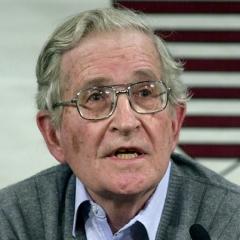
Noam Chomsky
Noam Chomsky

Noam Chomsky, born on December 7, 1928, is a renowned linguist from the United States. His research in generative grammar and transformational grammar has had a profound impact on modern linguistics. Chomsky's academic achievements extend beyond linguistics, as he is also an active political commentator and philosopher, known for his unique perspective and profound insights. more

You May Also Like

“In theory, inherent market inefficiencies and perverse incentives could be overcome by efficient regulation. But the same deep-seated tendencies that concentrate wealth and power in private tyrannies reduce the likelihood of such steps. In late 2009 there seemed to be one faint hope that Congress might institute some meaningful regulation: proposals by Senator Christopher Dodd, chair of the Senate Banking Committee. But Dodd succumbed to Wall Street pressure and abandoned his proposal in December 2009. One of its components was a new Consumer Financial Protection Agency intended to “crack down on abusive and risky lending practices that helped fuel last year’s financial crisis,” Michael Kranish commented in a rare press report. “Banks and other financial institutions have fought hard to kill the proposal,” he adds. And succeeded. He quotes Elizabeth Warren, the Harvard Law professor who originated the idea for the agency: “When all the dust settles, the real question for the history books will be whether Congress was able to create an independent consumer agency with the tools necessary to end abusive practices and to prevent future crises.” The answer appears to be a loud no, in our business-run democracy.”

“When I look at him, I see that there are people who are born with something that I cannot find the words for, something that means that others respect them and hold them in the highest esteem. I don’t know what it is—is it posture, is it a head held high, a penetrating gaze, a way of walking? Or maybe some spirit hovering around him? An angel who keeps him company? He has only to enter any space, be it the most decrepit shed or the holiest chamber, and all eyes turn to him at once, pleasure and appreciation on everyone’s face, although he has not yet done or said a thing. ...But I also fear falling into blind love, exaggerated and unhealthy, like that Heshel, who, if he could, would lie down like a dog at his feet.”

“Indigenous people from Brazil to Uganda are finding that some of the most aggressive land grabbing is being done by conservation organizations. A forest is suddenly rebranded a carbon offset and is put off-limits to its traditional inhabitants. As a result, the carbon offset market has created a whole new class of green human rights abuses, with farmers and Indigenous people being physically attacked by park rangers or private security when they try to access these lands.”