Quotessence
Home / Quotes / Quote by Dennis L. McKiernan

Quote by Dennis L. McKiernan

“I was glad to be gone from that place, for they listened not to simple reason, looked not at the world about them, sought not the truth, believing instead in the literal words of ancient tales - truths, history, parables, myths, legends, fables, and facts intermingled and recorded on their 'infallible' scrolls.”

Quote by Dennis L. McKiernan

Work

The Eye of the Hunter

This novel explores the complex mind of a hunter, examining the moral and ethical implications of their profession through a gripping narrative. more

Author
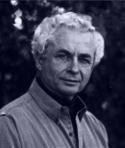
Dennis L. McKiernan
Dennis L. McKiernan

Dennis L. McKiernan is an American writer renowned for his fantasy novels. His works are typically set in medieval Europe and are characterized by rich imagination and profound themes. more

You May Also Like

“They disregarded the Torah — either willfully, or because the knowledge of the laws regarding handling of the Ark was not properly taught generations to generation. They suffered the consequences for such disobedience. The Philistines are not beholden to our laws. They have no such sacred responsibility. However, they still were cursed because of their foolish boast that they’d been victorious over Yahweh — a notion that the pharaoh in Mosheh’s day learned by suffering his own plagues.”

“I’d often found it funny how the only reason that writers of self-help books were rich and famous was because of selling their self-help books. Whereas, if there was any truth to these books, the person would have to be rich and famous before writing the book and even then the advice in it would be subjective at best. But then people were stupid. And bad taste, as Bukowski said, created many more millionaires than good taste. If you wanted a good example of people’s bad taste, all you needed to do was to consider the most popular book of all time—the Bible.”

“Love is that powerful and prevalent passion by which all the faculties and inclinations of the soul are determined, and on which both its perfection and happiness depend. The worth and excellency of a soul is to be measured by the object of its love: he who loveth mean and sordid things doth thereby become base and vile; but a noble and well-placed affection doth advance and improve the spirit unto a conformity with the perfections which it loves.”

“That curve is also the containing narrative shape of the Bible, because the mythical shape of the Bible, if we read it from beginning to end, is a comic one. It's a story in which man is placed in a state of nature from which he falls—the word "fall" is something which this diagram indicates visually.7 At the end of the story, he is restored to the things that he had at the beginning. Judaism focuses upon the story of Israel, which in the Old Testament is to be restored at the end of history, according to the way the prophets see that history. The Christian Bible is focused more on the story of Adam, who represents mankind as falling from a state of integration with nature into a state where he is alienated from nature. In symbolic terms, what Adam loses is the tree and the water of life. Those are images that we'll look at in more detail later. On practically the first page of the Bible we are told that Adam loses the tree and the water of life in the garden of Eden. On practically the last page of the Bible, in the last chapter of the Book of Revelation, the prophet has a vision of the tree and the water of life restored to man. That affinity between the structure of the Bible and the structure of comedy has been recognized for many centuries and is the reason why Dante called his vision of hell and purgatory and heaven a commedia.”

“The Bible doesn't like cyclical views of history. The reason it doesn't is that a cycle is a machine, and a cyclical view of history means a machine turning, something impersonal. Such a view would be part of that perverse tendency on the part of mankind to enslave himself to his own inventions and his own conceptions. Man invented the wheel, and so in no time at all he's talking about wheels of fate and wheels of fortune as something that are stronger than he is. That's the Frankenstein element in the human mind, an element which is part of original sin.”