Quotessence
Home / Quotes / Quote by Mary Oliver

Quote by Mary Oliver

“When it's over, I want to say: all my life I was a bride married to amazement. I was the bridegroom, taking the world into my arms. When it's over, I don't want to wonder if I have made of my life something particular, and real. I don't want to find myself sighing and frightened, or full of argument. I don't want to end up simply having visited this world.”

Quote by Mary Oliver

Work

New and selected poems

This volume presents a curated selection of a poet's work, combining newly written poems with pieces chosen from previous collections. It allows readers to trace the evolution of themes, style, and voice across different periods of the poet's career. The book typically serves as both an introduction for new readers and a comprehensive overview for those familiar with the poet's earlier publications, highlighting the continuity and changes in their artistic expression. more

Author
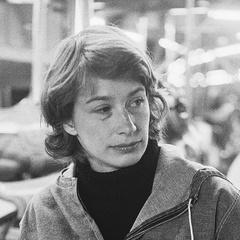
Mary Oliver
Mary Oliver

Mary Oliver is a renowned American poet, born on September 10, 1935. Her poetry is known for its profound depiction of the natural world and delicate insights into life. Oliver's style is simple and direct, which has won her a wide audience. more

You May Also Like

“On earth, we are like chess dice in the hands of the master. At each tweak, he decides which dice leads first. On his weakness, his own gets defeated. We are like the farmer who has planted and toiled, but on the day of rest, the rain sweeps everything away. All the labor, the hard work – all gone, and never to return as before. We are like the flowers that blossom each day, but then the floods sweep them away. We are left with nothing but heartbreak, sadness, and grief. Hoping to recover, but time doesn't heal anything. We are nothing here, nothing on earth, nothing in this world. Let each of us await his own time. Until then, YOLO.”

“… this Japanese classic, Ikuru, which, you know, I had loved for most of my life, you know, I think I first saw it when I was a boy, on British TV and it had a huge impact on me, partly because of my Japanese background but I think quite regardless of that… and I thought – I mean, bit of an exaggeration – I think I always kind of lived my life informed by the message in that film as I was growing up. Ikuru is an untypical film of [Kurosawa’s] in many ways. It’s a quiet, personal film, set in what was then the present day. No gangsters or anything like this you know. It’s the story about this civil servant, aging civil servant… whose life has been kind of… semi-lived – if at all. But when he learns that he is terminally ill, he suddenly… it becomes very urgent for him this question, ‘How do I make my life worthwhile?’ Now what really appealed to me about this film... was I thought it said something new and different… You can actually, you can make your life meaningful and triumphant… without having to do anything that’s going to earn you headlines in the newspaper or earn you great applause, you know? You have to locate that sense of… you have to find a very lonely sense of success and failure. And you have to locate that sense of success… you have to be strong enough to locate that sense of success somewhere very private and secret within yourself. But nevertheless it can be absolutely redeeming and fulfilling, if you can find it, you know. And I think it’s a very important message.”