Quotessence
Home / Quotes / Quote by Jack London

Quote by Jack London

“Such was the lesson that was quickly borne in upon him. It came hard, going as it did, counter to much that was strong and dominant in his own nature; and, while he disliked it in the learning of it, unknown to himself he was learning to like it. It was a placing of his destiny in another’s hands, a shifting of the responsibilities of existence. This in itself was compensation, for it is always easier to lean upon another than to stand alone.”

Quote by Jack London

Work

Dutch Courage and Other Stories

Browse quotes and source details for this work. more

Author
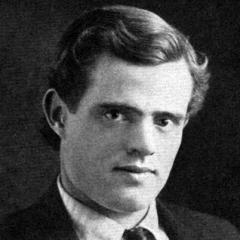
Jack London
Jack London

Jack London was an American author known for his adventure novels and realistic works. His writings often depicted the lives of the underclass and his profound insights into the natural world. His notable works include 'The Call of the Wild' and 'White Fang'. more

You May Also Like

“If we know that we are deeply and completely loved by Life then we will know how to let it flow through us freely. If we know that the essential force of Life is immensely beautiful and endlessly creative then we will know how to follow our inner guidance. If we know that our true being is spiritually perfect, complete, and pure then we will be healthy, well-balanced, productive, and happy.”

“Civility and good decision making do not require a multipage statement of ethics that a team of lawyers drafts. All it takes is a desire to do the right thing and a simple code of conduct like The Four-Way Test to bring out the best in every person who uses it.”

“Love, respect and trust can never be demanded. Love is just felt. It is not something to be exchanged. Respect and trust are earned. And to earn respect and trust you need to focus on your words and actions. You cannot force others to respect or trust you.”

“Horses are of a breed unique to Fantasyland. They are capable of galloping full-tilt all day without a rest. Sometimes they do not require food or water. They never cast shoes, go lame or put their hooves down holes, except when the Management deems it necessary, as when the forces of the Dark Lord are only half an hour behind. They never otherwise stumble. Nor do they ever make life difficult for Tourists by biting or kicking their riders or one another. They never resist being mounted or blow out so that their girths slip, or do any of the other things that make horses so chancy in this world. For instance, they never shy and seldom whinny or demand sugar at inopportune moments. But for some reason you cannot hold a conversation while riding them. If you want to say anything to another Tourist (or vice versa), both of you will have to rein to a stop and stand staring out over a valley while you talk. Apart from this inexplicable quirk, horses can be used just like bicycles, and usually are. Much research into how these exemplary animals come to exist has resulted in the following: no mare ever comes into season on the Tour and no stallion ever shows an interest in a mare; and few horses are described as geldings. It therefore seems probable that they breed by pollination. This theory seems to account for everything, since it is clear that the creatures do behave more like vegetables than mammals. Nomads appears to have a monopoly on horse-breeding. They alone possess the secret of how to pollinate them.”

“Extreme poverty isn’t just an African issue or an Asian issue or a South American issue. It is a global issue. Before flying overseas to help relieve poverty abroad, consider the poverty in your own backyard. Every country on every continent has people impacted by poverty—whether it is relative or absolute. Bringing extreme poverty down to zero will take more trial and error, more methods, more innovation, and more communication. Most importantly, it will take more trust—the trust that people are aware of their problems and are creative enough to solve them when given the right resources. People need opportunities, connections, and education to learn more about life’s possibilities, not handouts, performative sympathy, and empty promises.”