Quotessence
Home / Quotes / Quote by William Gibson

Quote by William Gibson

“Bugis Street, once famous for its transvestite prostitutes - the sort of place where one could have imagined Noel Coward, ripped on opium, cocaine and the local tailoring, just off his rickshaw for a night of high buggery - had, when it proved difficult to suppress, a subway station dropped on top of it.”

Quote by William Gibson

Work

Distrust That Particular Flavor

This book is a compilation of short stories that delve into the intricacies of human emotions and social dynamics. The narratives often revolve around the characters' internal conflicts and their interactions with others, reflecting the multifaceted nature of human connections. more

Author
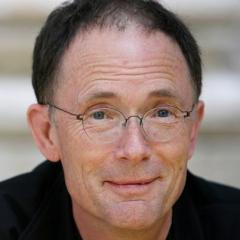
William Gibson
William Gibson

William Gibson, born on March 17, 1948, is a renowned science fiction novelist from Canada. His works are known for their unique futurist style and profound insights into technological development, making him a representative figure in the cyberpunk literary genre. more

You May Also Like

“We have a lot more opportunities in Singapore now compared to the 1960s and 1970s. We have access to the same careers, receive the same education and compensation. Many also venture into industries that were formerly “men’s fields”. The last I checked we were ranked #55 out of 150 odd countries in terms of gender equality, according to World Economic Forum. We are still lagging behind Scandinavia and some European countries, but we are way above all the Asian countries. We are quite fortunate to be women in Singapore.”

“How, I asked, would people debate freely if the fear factor hung over conversations that some deemed controversial? I concluded: “As long as the government is perceived as Big Brother waiting to pounce on those who are critical of policies, and as long as the talented and the bright imagine a conspiracy at every corner, you tell me, how to become a world-class country?”

“Editors knew they were in a charmed circle, being privy to the policymakers’ thinking, but these off-the-record sessions were also a double-edged sword as they tied editors’ hands. When reporters uncovered stories on which editors had already been briefed, such stories had to be held back until the official announcements were made. Editors also found themselves hemmed in when they evaluated stories, because they always had to bear in mind what had been discussed with the ministers. Such privileged meetings hung like an albatross around many editors’ necks.”

“Will the Singapore government be amenable to this type of journalism, as it had spoken out publicly on many occasions against mixing news with analysis and comment; the separation of news and analysis and comment had to be like that between church and state.”

“Cheong genuinely believed that being pro-government was nothing to be ashamed of. I read his book as a reminder to new ministers and new editors that the relationship was a special and delicate one needing mutual respect. That is why he gave some examples of the difficult negotiations and the give-and-take with the government. He feared that it was becoming a more one-way subservient relationship.”

“Peter’s management style was very different from that of his predecessors. He was a listener, always ready to hear out his journalists when they approached him. He ran an open and transparent newsroom and believed in the principle that government and media should not be one. There should be a line, no matter how thin, between the two. He believed the PAP was good for Singapore, but not that all its actions were correct.”

“In a private setting, Leslie and Minister for Information and the Arts George Yeo engaged in a debate over the issue, with George Yeo finally declaring that the government would defend its Members of Parliament even if they were wrong.”