Quotessence
Home / Quotes / Quote by Siegfried Sassoon

Quote by Siegfried Sassoon

“An innocent youth wrote recently that he is convinced I am the greatest writer in the world (from New Zealand). A touching letter – so simple & unaffected. Another young man wrote, only yesterday, that I am to him what Hardy must have been to me. Such tributes are worth having, aren't they, even if I don't deserve them.”

Quote by Siegfried Sassoon

Work

Siegfried Sassoon: Poet's Pilgrimage

Browse quotes and source details for this work. more

Author
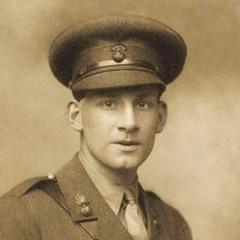
Siegfried Sassoon
Siegfried Sassoon

Siegfried Sassoon was an English poet known for his anti-war poetry. Born on September 8, 1886, and died on September 1, 1967, Sassoon's poetry is celebrated for its profound emotion and critical reflection on war. more

You May Also Like

“Dad was on the porch, pacing back and forth in that uneven stride he had on account of having a gimp leg. When he saw, he let out a yelp of delight and started hobbling down the steps towards us. Mom came running out of the house. She sank down on her knees, clasped her hands in front of her, and started praying up to the heavens, thanking the Lord for delivering her children from the flood. It was she who had saved us, she declared, by staying up all night praying. "You get down on your knees and thank your guardian angel," she said. "And thank me, too." Helen and Buster got down and started praying with Mom, but I just stood there looking at them. The way I saw it. I was the one who'd saved us all, not Mom and not some guardian angel. No one was up in that cottonwood tree except the three of us. Dad came alongside me and put his arms around my shoulders. "There weren't no guardian angel, Dad," I said. I started explaining how I'd gotten us to the cottonwood tree in time, figuring out how to switch places when our arms got tired and keeping Buster and Helen awake through the long night by quizzing them. Dad squeezed my shoulder. "Well, darling," he said, "maybe the angel was you.”

“I come home from work this evening there was a note in the frying pan said Fix Your Own Supper Babe I Run Off With The Fuller Brush Man Well I sat down at the table screamed & hollered & cried I commenced to carring on 'till I almost lost my mind and I miss the way she used to Yell At Me the way she used to Cuss & Moan and if I ever go out and get married again I'll never leave my wife at home The Frying Pan Diamonds In The Rough John Prine”

“Do you have a frying pan? Not Teflon, I hate that stuff. Cast iron? Or stainless steel?" I found River an old cast iron pan in the cabinet by the sink. I put it on the stove, and I imagined, for a second, Freddie, young, wearing a pearl necklace and a hat that slouched off to one side, standing over that very pan and making an omelet after a late night spent dancing those crazy, cool dances they did back in her day. "Brilliant," River said. He lit the gas stove and threw some butter in the pan. Then he cut four pieces of the baguette, rubbed them with a clove of garlic, and tore a hole out in each. He set the bread in the butter and cracked an egg onto the bread so it filled up the hole. The yolks of the eggs were a bright orange, which, according to Sunshine's dad, meant the chickens were as happy as a blue sky when they laid them. "Eggs in a frame," River smiled at me. When the eggs were done, but still runny, he put them on two plates, diced a tomato into little juicy squares, and piled them on top of the bread. The tomato had been grown a few miles outside of Echo, in some peaceful person's greenhouse, and it was red as sin and ripe as the noon sun. River sprinkled some sea salt over the tomatoes, and a little olive oil, and handed me a plate. "It's so good, River. So very, very good. Where the hell did you learn to cook?" Olive oil and tomato juice were running down my chin and I couldn't have cared less. "Honestly? My mother was a chef." River had the half smile on his crooked mouth, sly, sly, sly. "This is sort of a bruschetta, but with a fried egg. American, by way of Italy.”

“Laura Dillard." It seemed impossible that he could share this with Catherine Marks, but she seemed to object he would. And somehow he was obliging her. "Beautiful girl. She loved to watercolor. Few people are good at that, they're too afraid of making mistakes. You can't lift the color or hide it, once it's put down. And water is unpredictable- an active partner in the painting- you have to let it behave as it will. Sometimes the color diffuses in ways you don't expect, or one shade backruns into another. That was fine with Laura. She liked the surprises of it. We had known each other all during childhood. I went away for two years to study architecture, and when I came back, we fell in love. So easily. We never argued- there was nothing to argue over. Nothing in our way.”

“At least work keeps you from your vices," Win quipped one evening before supper, rubbing his hair affectionately as she joined him in the parlor. "I happen to like my vices," Leo told her. "That's why I went to the trouble of acquiring them." "What you need to acquire," Win said gently, "is a wife. And I'm not saying that out of self-interest, Leo." He smiled at her, this gentlest of sisters, who had fought so many personal battles for the sake of love. "You don't possess a molecule of self-interest, Win.”