Quotessence
Home / Quotes / Quote by Kevin J. Anderson

Quote by Kevin J. Anderson

“Working like automatons, the team of doomed spacetroopers attached themselves to the breached wall of the Death Star’s power core. Intense radiation spewed out, darkening their faceplates so they could barely see, slowly frying their life-support systems. Moving sluggishly as they weakened under the invisible onslaught, they wrestled thick sheets of plating in the low gravity. They used rapid laser welders to slap patches over the breach, reinforcing it to withstand an energy buildup. One of the spacetroopers, his control pack sparking with blue lightning as the suit’s circuits all broke down, thrashed about in eerie silence; his arm movements gradually slowed until he drifted free. One of the others took his place, ignoring the lost companion. Every one of them had already received a lethal dose of radiation. They knew it, but their training had been thorough: they lived to serve the Empire. One of the troopers completed a last weld at the hottest point of the breach. His skin blistered. His nerves were deadened. His eyes and lungs hemorrhaged blood. But he forced himself to finish his task. The cold vacuum of space solidified the welds instantly. With a gurgling voice filled with fluid, the spacetrooper gasped into his helmet radio, “Mission accomplished.” Then the remaining troopers, with failing life-support systems and bodies already savaged by the fatal radiation, released their hold on the power core in unison. They drifted free, dropping toward the brilliant energy discharge like shooting stars.”

Quote by Kevin J. Anderson

Author
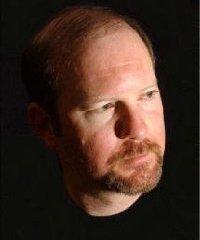
Kevin J. Anderson
Kevin J. Anderson

Kevin J. Anderson, born on March 27, 1962, is a renowned science fiction author. His works span a variety of science fiction themes, including space opera, time travel, and artificial intelligence. Anderson is known for his rich imagination, in-depth character development, and engaging storytelling style. more

You May Also Like

“I do not attach too much attention to words. I enlisted, and as several times already in my life, I was prepared to follow the consequences of my actions. But I did not realize that the Legion would make me drink this chalice to the dregs and that these dregs would make me drunk, and that by taking a cynical pleasure in discrediting and debasing myself, I would end up by breaking free of everything to conquer my liberty as a man. To be. To be a man. And discover solitude. That is what I owe to the Legion, and to the old lascars of Africa, soldiers NCOs, officers, who came to lead us and mix with us as comrades, these desperadoes, these survivors of God knows what colonial epics, but who were all men, all. And that made it well worth the risk of death to meet these damned souls, who smelled of the galleys and were covered with tattoos. None of them ever let us down, and each one was willing to sacrifice himself, for nothing, for kudos, because he was drunk, for a challenge, for a laugh, to stick it to someone by God. They were tough and their discipline was of iron. These were professionals. And the profession of a man of war is an abominable thing and leaves scars, like poetry. You have it or you don’t. One cannot cheat because nothing wears out the soul more and stigmatizes the face (and secretly the heart) of man and is more vain than to kill, and to begin again.”

“Once there was a boy,” said Jace. Clary interrupted immediately. “A Shadowhunter boy?” “Of course.” For a moment a bleak amusement colored his voice. Then it was gone. “When the boy was six years old, his father gave him a falcon to train. Falcons are raptors – killing birds, his father told him, the Shadowhunters of the sky. “The falcon didn’t like the boy, and the boy didn’t like it, either. Its sharp beak made him nervous, and its bright eyes always seemed to be watching him. It would slash at him with beak and talons when he came near: For weeks his wrists and hands were always bleeding. He didn’t know it, but his father had selected a falcon that had lived in the wild for over a year, and thus was nearly impossible to tame. But the boy tried, because his father told him to make the falcon obedient, and he wanted to please his father. “He stayed with the falcon constantly, keeping it awake by talking to it and even playing music to it, because a tired bird was meant to be easier to tame. He learned the equipment: the jesses, the hood, the brail, the leash that bound the bird to his wrist. He was meant to keep the falcon blind, but he couldn’t bring himself to do it – instead he tried to sit where the bird could see him as he touched and stroked its wings, willing it to trust him. Hee fed it from his hand, and at first it would not eat. Later it ate so savagely that its beak cut the skin of his palm. But the boy was glad, because it was progress, and because he wanted the bird to know him, even if the bird had to consume his blood to make that happen. “He began to see that the falcon was beautiful, that its slim wings were built for the speed of flight, that it was strong and swift, fierce and gentle. When it dived to the ground, it moved like likght. When it learned to circle and come to his wrist, he neary shouted with delight Sometimes the bird would hope to his shoulder and put its beak in his hair. He knew his falcon loved him, and when he was certain it was not just tamed but perfectly tamed, he went to his father and showed him what he had done, expecting him to be proud. “Instead his father took the bird, now tame and trusting, in his hands and broke its neck. ‘I told you to make it obedient,’ his father said, and dropped the falcon’s lifeless body to the ground. ‘Instead, you taught it to love you. Falcons are not meant to be loving pets: They are fierce and wild, savage and cruel. This bird was not tamed; it was broken.’ “Later, when his father left him, the boy cried over his pet, until eventually his father sent a servant to take the body of the bird away and bury it. The boy never cried again, and he never forgot what he’d learned: that to love is to destroy, and that to be loved is to be the one destroyed.”