Quotessence
Home / Quotes / Quote by Leo Tolstoy

Quote by Leo Tolstoy

“He was nine years old; he was a child; but he knew his own soul, it was precious to him, he protected it as the eyelid protects the eye, and he let no one into his soul without the key of love. His teachers complained that he did not want to learn, but his soul was filled with an abundant thirst for knowledge. He learned from Kapitonich, from his nanny, from Nadenka, from Vasily Lukich, but not from his teachers. The water that his father and his teacher were expecting to turn the wheels of their mill had long ago leaked away and was working elsewhere.”

Quote by Leo Tolstoy

Work

ANNA KARENINA

Anna Karenina is a profound literary work that delves into the complexities of human relationships and the impact of societal expectations on individual lives. The story follows the tragic fate of Anna, a married woman who falls in love with Count Vronsky, leading to a series of dramatic events that challenge the moral and social fabric of her world. more

Author

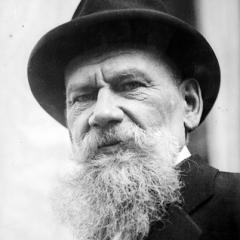
Leo Tolstoy
Leo Tolstoy

Leo Tolstoy was a Russian writer and thinker, a prominent representative of 19th-century Russian literature. His works deeply revealed social contradictions and human nature, and had a profound impact on the world. more

You May Also Like

“People will do anything, no matter how absurd, to avoid facing their own souls. They will practice Indian yoga and all its exercises, observe a strict regimen or diet, learn theosophy by heart, or mechanically repeat mystic texts from the literature of the whole world – all because they cannot get on with themselves and have not the slightest faith that anything useful could ever come out of their souls. … It is rewarding to watch patiently the silent happenings in the soul, and the most and the best happens when it is not regulated from outside and from above. I readily admit that I have such a great respect for what happens in the human soul that I would be afraid of disturbing and distorting the silent operation of nature by clumsy interference.””

“Gardens remind us to be patient and humble because that’s what they are. They have no delusions of grandeur or plotting schemes. They trust implicitly that they will be cared for as part of the cycle of nature. They give so much, yet they are unaware of their gift. They have no perception of themselves. They treat all of their inhabitants, of every type and form, as sacred and worthy. They surrender themselves to the moment with flawless confidence and, when it is called for, with the unmarred hope of renewal.”