Quotessence
Home / Quotes / Quote by Jim Henson

Quote by Jim Henson

“Sometimes I have trouble falling asleep but it's not so bad I don't worry and I don't weep. In fact I'm glad. Because I get up off my pillow and I flip on the light. I get down and get hip in the still of the night I stretch and I yawn and then I breathe real deep And dance myself to sleep. I hoof around my beddie just a-tappin' my toes Before I know what's happened I'm a-ready to doze Got some partners I can count the boogie-woogie sheep I dance myself to sleep.”

Quote by Jim Henson

Work

It's Not Easy Being Green and Other Things to Consider

Browse quotes and source details for this work. more

Author
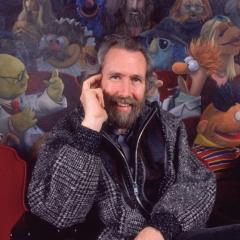
Jim Henson
Jim Henson

Jim Henson, born on September 24, 1936, in St. Paul, Minnesota, was a renowned American puppeteer, director, screenwriter, and producer. Known for his unique puppetry style and contributions to children's programming, Henson is best known for his work on 'Sesame Street' and 'The Muppet Show'. His creations have been beloved by children and appreciated by adults, leaving a profound impact on the television and entertainment industry. more

You May Also Like

“The flow. Yeah. Knowing you could step on the court and make it happen. You practiced, sure. But then, when you walked out there, you could just go. You could flow, that was it: you created and you didn't totally know how. You just knew you could, so you did. It wasn't thinking and it wasn't imitating somebody else's moves, though you always looked carefully when you watched good players play. But when you played... it was something you couldn't explain. Neal used to know. It didn't come from thinking about it.”

“Each day before the end of eve she sought her lover, nor would him leave, until the stars were dimmed, and day came glimmering eastward silver-grey. Then trembling-veiled she would appear, and dance before him, half in fear; there flitting just before his feet she gently chid with laughter sweet: 'Come! dance now, Beren, dance with me! For fain thy dancing I would see!”

“Our opportunities to give of ourselves are indeed limitless, but they are also perishable. There are hearts to gladden. There are kind words to say. There are gifts to be given. There are deeds to be done. There are souls to be saved. As we remember that “when ye are in the service of your fellow beings ye are only in the service of your God,” (Mosiah 2:17) we will not find ourselves in the unenviable position of Jacob Marley’s ghost, who spoke to Ebenezer Scrooge in Charles Dickens’s immortal "Christmas Carol." Marley spoke sadly of opportunities lost. Said he: 'Not to know that any Christian spirit working kindly in its little sphere, whatever it may be, will find its mortal life too short for its vast means of usefulness. Not to know that no space of regret can make amends for one life’s opportunity misused! Yet such was I! Oh! such was I!' Marley added: 'Why did I walk through crowds of fellow-beings with my eyes turned down, and never raise them to that blessed Star which led the Wise Men to a poor abode? Were there no poor homes to which its light would have conducted me!' Fortunately, as we know, Ebenezer Scrooge changed his life for the better. I love his line, 'I am not the man I was.' Why is Dickens’ "Christmas Carol" so popular? Why is it ever new? I personally feel it is inspired of God. It brings out the best within human nature. It gives hope. It motivates change. We can turn from the paths which would lead us down and, with a song in our hearts, follow a star and walk toward the light. We can quicken our step, bolster our courage, and bask in the sunlight of truth. We can hear more clearly the laughter of little children. We can dry the tear of the weeping. We can comfort the dying by sharing the promise of eternal life. If we lift one weary hand which hangs down, if we bring peace to one struggling soul, if we give as did the Master, we can—by showing the way—become a guiding star for some lost mariner.”

“A major assumption that underlies this selection is that it is only within work that is progressive, experimental or avant-garde that staid, old-fashioned images and ideas about gender can be challenged and alternatives imagined. I have never seen a ballet performance that has not disappointed me.”