“Philosophiren, says Novalis, ist dephlegmatisiren vivificiren. The service of philosophy, of speculative culture, towards the human spirit is to rouse, to startle it into sharp and eager observation. Every moment some form grows perfect in hand or face; some tone on the hills or the sea is choicer than the rest; some mood of passion or insight or intellectual excitement is irresistibly real and attractive for us,—for that moment only. Not the fruit of experience, but experience itself, is the end. A counted number of pulses only is given to us of a variegated, dramatic life. How may we see in them all that is to be seen in them by the finest senses? How shall we pass most swiftly from point to point, and be present always at the focus where the greatest number of vital forces unite in their purest energy? To burn always with this hard, gemlike flame, to maintain this ecstasy, is success in life. In a sense it might even be said that our failure is to form habits: for, after all, habit is relative to a stereotyped world, and meantime it is only the roughness of the eye that makes any two persons, things, situations, seem alike. While all melts under our feet, we may well catch at any exquisite passion, or any contribution to knowledge that seems by a lifted horizon to set the spirit free for a moment, or any stirring of the senses, strange dyes, strange colours, and curious odours, or work of the artist's hands, or the face of one's friend. Not to discriminate every moment some passionate attitude in those about us, and in the brilliancy of their gifts some tragic dividing of forces on their ways, is, on this short day of frost and sun, to sleep before evening. With this sense of the splendour of our experience and of its awful brevity, gathering all we are into one desperate effort to see and touch, we shall hardly have time to make theories about the things we see and touch. What we have to do is to be for ever curiously testing new opinions and courting new impressions, never acquiescing in a facile orthodoxy of Comte, or of Hegel, or of our own. Philosophical theories or ideas, as points of view, instruments of criticism, may help us to gather up what might otherwise pass unregarded by us. "Philosophy is the microscope of thought." The theory or idea or system which requires of us the sacrifice of any part of this experience, in consideration of some interest into which we cannot enter, or some abstract theory we have not identified with ourselves, or what is only conventional, has no real claim upon us.”
Quote by Walter Pater
Work
The Renaissance: Studies in Art and Poetry
This book delves into the cultural and artistic developments of the Renaissance, analyzing the works of artists and poets from the period. It examines the influence of the Renaissance on the subsequent evolution of art and literature. more
Author
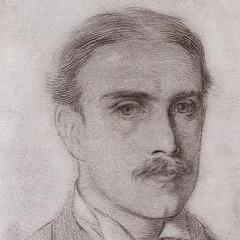
Walter Pater
Walter Pater was a British essayist, critic, and poet, known for his influential literary criticism and contributions to the Aesthetic Movement. Born on August 4, 1839, and died on July 30, 1894, Pater's work had a significant impact on the development of modern literary theory and the appreciation of art and literature. more
You May Also Like
Source: The Erstwhile Tyler Kyle
Source: Intermezzo
Source: A Short Walk Through a Wide World
Source: The Book of Disquiet
Source: Under Saturn's Shadow: The Wounding and Healing of Men
“It's noble to be timid, illustrious to fail to act, sublime to be inept at living.”
Source: The Book of Disquiet
Source: The Book of Disquiet
“Make eye contact with a tree.”
Source: How to Be Perfect: An Illustrated Guide
“Avoid selling to dumb customers, there aren't enough left!”
Source: The Book of Disquiet