Quotessence
Home / Quotes / Quote by Jean Baudrillard

Quote by Jean Baudrillard

“One must be simultaneously bursting with life and totally unreal. Every acceleration produces an equivalent or even greater mass. Every mobilization gives rise to an equal or greater immobility. Every differentiation gives rise to an equal or greater indifference. All speed produces an equal or greater inertia. There is no need to brake. No need for a braking machine. Besides, such a machine has never existed. Only accelerating machines exist. Or ones for decelerating, which amounts to the same thing. But not for slowing down, because no machinery can produce that. Only language, music and the body can do that.”

Quote by Jean Baudrillard

Work

Cool memories

This book is a compilation of personal anecdotes and memories that evoke a sense of nostalgia for the reader, capturing the essence of bygone times and the emotions associated with them. more

Author

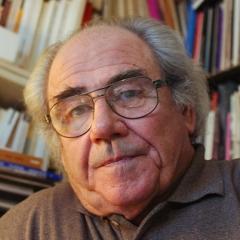
Jean Baudrillard
Jean Baudrillard

Jean Baudrillard was a French philosopher known for his critical studies on consumerism, media, and semiotics. His theories have had a profound impact on postmodernism and cultural studies. more

You May Also Like

“As in the case of the individual, not all the information which is available to the race at one time is accessible without special effort. There is a well-known tendency of libraries to become clogged by their own volume; of the sciences to develop such a degree of specialization that the expert is often illiterate outside his own minute specialty. Dr. Vannevar Bush has suggested the use of mechanical aids for the searching through vast bodies of material. These probably have their uses, but they are limited by the impossibility of classifying a book under an unfamiliar heading unless some particular person has already recognized the relevance of that heading for that particular book. In the case where two subjects have the same techniques and intellectual content but belong to widely separated fields, this still requires some individual with an almost Leibnizian catholicity of interest.”

“It was cowardice, Mr Stevens. Simple cowardice. Where could I have gone? I have no family. Only my aunt. I love her dearly, but I can’t live with her for a day without feeling my whole life is wasting away. I did tell myself, of course, I would soon find some new situation. But I was so frightened, Mr Stevens. Whenever I thought of leaving, I just saw myself going out there and finding nobody who knew or cared about me. There, that’s all my high principles amount to. I feel so ashamed of myself. But I just couldn’t leave, Mr Stevens. I just couldn’t bring myself to leave.”