Quotessence
Home / Quotes / Quote by Joe Abercrombie

Quote by Joe Abercrombie

Work

Last Argument of Kings

Browse quotes and source details for this work. more

Author
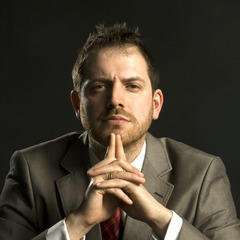
Joe Abercrombie
Joe Abercrombie

Joe Abercrombie, born on December 31, 1974, is a British writer known for his dark fantasy style. His works are highly appreciated by readers, with notable series including 'The First Law' and 'The Heroes'. more

You May Also Like

“The Bright Lights of Sarajevo After the hours that Sarajevans pass queuing with empty canisters of gas to get the refills they wheel home in prams, or queuing for the precious meagre grams of bread they’re rationed to each day, and often dodging snipers on the way, or struggling up sometimes eleven flights of stairs with water, then you’d think the nights of Sarajevo would be totally devoid of people walking streets Serb shells destroyed, but tonight in Sarajevo that’s just not the case The young go walking at stroller’s pace, black shapes impossible to mark as Muslim, Serb or Croat in such dark, in unlit streets you can’t distinguish who calls bread hjleb or hleb or calls it kruh. All take the evening air with stroller’s stride no torches guide them, but they don’t collide except as one of the flirtatious ploys when a girl’s dark shape is fancied by a boy’s. Then the tender radar of the tone of voice shows by its signals she approves his choice. Then match or lighter to a cigarette to check in her eyes if he’s made progress yet. And I see a pair who’ve certainly progressed beyond the tone of voice and match-flare test and he’s about, I think, to take her hand and lead her away from where they stand on two shell scars, where, in ‘92 Serb mortars massacred the breadshop queue and blood-dunked crusts of shredded bread lay on this pavement with the broken dead. And at their feet in holes made by the mortar that caused the massacre, now full of water from the rain that’s poured down half the day, though now even the smallest clouds have cleared away leaving the Sarajevo star-filled evening sky ideally bright and clear for bomber’s eye in those two rain-full shell-holes the boy sees fragments of the splintered Pleiades, sprinkled on those death-deep, death-dark wells splashed on the pavement by Serb mortar shells. The dark boy-shape leads dark girl-shape away to share one coffee in a candlelit café until the curfew, and he holds her hand behind AID flour-sacks refilled with sand”

“The Bright Lights of Sarajevo After the hours that Sarajevans pass queuing with empty canisters of gas to get the refills they wheel home in prams or queuing for the precious meagre grams of bread they’re rationed to each day, and often dodging snipers on the way, or struggling up sometimes eleven flights of stairs with water, then you’d think the nights of Sarajevo would be totally devoid of people walking streets Serb shells destroyed, but tonight in Sarajevo that’s just not the case – The young go walking at stroller’s pace black shapes impossible to mark as Muslim, Serb or Croat in such dark in unlit streets you can’t distinguish who calls bread hjleb or hleb or calls it kruh. All take the evening air with stroller’s stride no torches guide them, but they don’t collide except as one of the flirtatious ploys when a girl’s dark shape is fancied by a boy’s. Then the tender radar of the tone of voice shows by its signals she approves his choice. Then match or lighter to a cigarette to check in her eyes if he’s made progress yet. And I see a pair who’ve certainly progressed beyond the tone of voice and match-flare test and he’s about, I think, to take her hand and lead her away from where they stand on two shell scars, where, in 1992 Serb mortars massacred the breadshop queue and blood-dunked crusts of shredded bread lay on this pavement with the broken dead. And at their feet in holes made by the mortar that caused the massacre, now full of water from the rain that’s poured down half the day, though now even the smallest clouds have cleared away leaving the Sarajevo star-filled evening sky ideally bright and clear for bomber’s eye in those two rain-full shell-holes the boy sees fragments of the splintered Pleiades, sprinkled on those death-deep, death-dark wells splashed on the pavement by Serb mortar shells. The dark boy-shape leads dark girl-shape away to share one coffee in a candlelit café until the curfew, and he holds her hand behind AID flour-sacks refilled with sand.”

“Бути нейтральним оповідачем - знак привілейованого стану. Коли ти пишеш про війну в будь-якій граній країні, яким би літнім малятком ти не був, дозволити собі нейтрально потеревенити про війну, піднятися над битвою, даруйте, ти не можеш. А з часом і не захочеш. Бути упередженим оповідачем - о, це так само привілей.”

“Одна з героїнь розказує про те, як вороже сприймають південці тих, хто повертався, як на всі коментарі щодо соціального і політичного життя колишні втікачі отримували риторичне питання: «Чи вам відомо, що ми тут виборювали собі свободу?»”

“У Могадишо дуже багато собак - зголоднілих, покинутих, небезпечних. Одна сука народжує просто на вулиці, Джібле допомагає песиці та її цуценяті. Дуже щемка сцена: зголодніла собака, яка родить посеред війни. Та і в принципі: голодні пси на руїнах - це один із найрозповсюдженіших спосіб уявити собі війну. Але не цю війну, ну от не саме цю війну. У Могадишо не може бути зграй собак. Це мусульманське місто, місто, де діє шаріат. Мати справу з псами - означає забруднитися, осквернити себе і свій дім. У місті були пси, яких покидали немусульмани, що втікали від війни. Цих псів дуже скоро відстріляли. Фарах не може цього не знати. Але він вводить сцени зі здичавілими собаками на руїнах і з сукою, що народжує під обстрілами. Ну, бо таким є світ зайди Джібле, значить, він має реалізуватися в Могадишо - «на вимогу».”

“Він тепер переконаний, що знає, як жити на війні. Він помиляється. На могилі матері Джібле злиться: друзі, які за нею пильнували, доглядальниця, яку він з США оплатив, ніхто йому не зателефонував і не повідомив, що стан дуже старої жінки погіршується; він сам час до часу дзвонив сусідам матері, але ті теж нічого конкретного не казали. Джібле злиться: чому вони всі такі байдужі до його почуттів! Уявили собі місто, в якому тривають бої, чи згадали собі таке місто? Від старості помирає жінка. Її треба зараз спробувати підтримати і дати гідно піти, у місті нема навіть їжі, не те що ліків. Її треба буде поховати, а в місті стільки мертвих тіл щодня, що грифи і марабу ще двадцять років житимуть на центральних вулицях, наче ті голуби в Венеції. Саме цієї миті треба шукати можливість телефонувати її синові в США. Який приїде лише через десять років... Усе ж ясно, правда?”

“They all knew this was coming. They all knew war would reach into the pools of kinship between countless people and gut the innards of it like emptying out a pumpkin. So many seeds torn away and crushed into nothing; seeds of friendship, seeds of romance, seeds of family. All of them planted and ruined in various stages, left with nothing but growing pains and, worse than that, the pain of absent growth altogether. War is cruel. It's cancerous. The end of the world is always tied to war, isn't it? Maybe this is why; because war is so much more than just war. It goes beyond bullets and blood and bodies. War comes in like a flood, like a disease, and it claims anyone who comes in contact with it. Even the living can't get free from it; they're as claimed as the dead are. Once war touches them, they're branded to their last breath. In this world, most people have been branded for a lot longer than they stepped on their first battlefield.”

“Finally, Monty clears his throat and says, "Alright, well, I'm claiming Regulus. We'll take the back." Regulus looks oddly charmed by this. "Hey, be careful," Sirius and James announce at basically the same exact time, and Regulus rolls his eyes as Monty snorts. They're clearly thick as thieves, because Regulus' lips curl up when Monty knocks their shoulders together, and they slink off while whispering to each other, Monty chuckling quietly as they go. James and Sirius exchange an exasperated look.”