Quotessence
Home / Quotes / Quote by Ansel Adams

Quote by Ansel Adams

Author

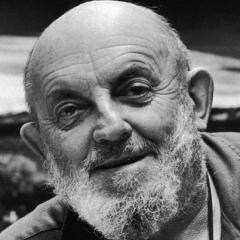
Ansel Adams
Ansel Adams

Ansel Adams, born on February 20, 1902, and died on April 22, 1984, was a renowned American landscape photographer. His work is known for its exquisite black and white photography techniques and profound representation of natural landscapes. more

You May Also Like

“Imaginative humans came together to hunt, farm, trade, and build incrementally sophisticated tools for transportation, communication, productivity, and convenience. ... Tribes and villages became kingdoms and empires, only to later dissolve into the cities and countries of a global civilization. ... Today, we live in concrete jungles, store fruit in fridges, cook oats with microwaves, and carry smartphones in our pockets. Electricity lights up our world, while the energy for it comes from increasingly sustainable sources. Global warming has finally convinced us to grow our food and fuel our activities in ways that do not pollute the planet, exhaust ecosystems, or exploit our fellow animals. We now seek to preserve the environmental stability of the last 10,000 years, during which our species transformed from a few million wandering foragers to nearly ten billion technological titans. Today, we are masters of science, exploring everything from the cosmic to the quantum. We discuss Einstein’s gravity and spacetime relativity, while decoding the molecular mysteries of life and longevity. We fling satellites into orbit, hook computers up to an internet, and seed our society with intelligent programs and robots.”

“There are no doubt brain-states associated with every experience, transcendent or mundane; why, then, should the trivial truth that mystical or contemplative insight is correlated with a distinctive set of neural activities be taken as evidence that such insight is merely a psychological state, without a real object? By that logic, the reality that there’s a brain-state associated with hearing a performance of Bach means that I can’t believe in the objective reality of that music. Whatever the case may be, I know this: to imagine that a “science of mind”—a science of irreducible first-person experience—is possible in terms purely of the third-person facts of neurophysiology, without reference to what mental interiority discloses to itself about itself, is worse than folly. The only “science of mind” that might actually reveal the intrinsic nature of the mental would be something like the contemplative disciplines proper to the great mystical traditions of the world’s religions. There can be no real science of mind that’s not, to put it bluntly, a spiritual science.”

“To understand the autistic brain is to enter a world shaped by depth, precision, and sensitivity.”

“In contrast to a journalistic appropriation, however, scientists will endeavour to reveal the principles and building blocks of their own construction and make them comprehensible. They will also endeavour to take into account all available details to such an extent that they do not contradict their image, in the words of the philosopher Karl Popper, to test the ‘truth similarity’ of a theory [K. Popper, Objective Knowledge. An Evolutionary Approach]. If they succeed in doing this, some will grant the result the quality of a “re-construction” of past reality and thus raise it to an “objective” level. In the vast majority of cases, however, this is not the only possible view, not even the most probable in the mathematical sense, because historical facts are rarely calculable, but a plausible one, i.e. a treatment of the problem that is appropriate to it and makes a recognisable contribution to its understanding [E. von Glasersfeld, An Introduction to Radical Constructivism]. One of the most important tasks of a degree programme is to learn to allow this plurality of perspectives without confusing it with arbitrariness.”