“The black mother perceives destruction at every door, ruination at each window, and even she herself is not beyond her own suspicion. She questions whether she loves her children enough- or more terribly, does she love them too much? Do her looks cause embarrassment- or even terrifying, is she so attractive her sons begin to desire her and her daughters begin to hate her. If she is unmarried, the challenges are increased. Her singleness indicates she has rejected or has been rejected by her mate. Yet she is raising children who will become mates. Beyond her door, all authority is in the hands of people who do not look or think or act like her children. Teachers, doctors, sales, clerks, policemen, welfare workers who are white and exert control over her family’s moods, conditions and personality, yet within the home, she must display a right to rule which at any moment, by a knock at the door, or a ring in the telephone, can be exposed as false. In the face of this contradictions she must provide a blanket of stability, which warms but does not suffocate, and she must tell her children the truth about the power of white power without suggesting that it cannot be challenged.”
Quote by Maya Angelou
Book:The Heart of a Woman
Work
The Heart of a Woman
This novel delves into the emotional landscape of a woman's experiences, examining her relationships, self-discovery, and the trials she faces in her quest for fulfillment and understanding. more
Author
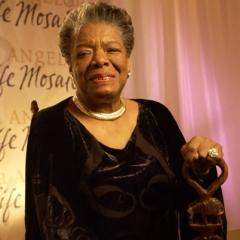
Maya Angelou
Maya Angelou was an American author, poet, playwright, actress, and lecturer, known for her profound exploration of race, gender, and culture in her work. Her autobiographical works, including 'I Know Why the Caged Bird Sings,' which detailed her early life of poverty and sexual exploitation, have gained widespread acclaim. more
You May Also Like
Source: Leah
“You can't worry about the future so much that you miss out on the present.”
Source: Nice Girls Don't Live Forever
Source: What Is Not Yours Is Not Yours
Source: Untamed
Source: Witch Child
Source: Next to Normal
“A husband, a wife and some kids is not a family. It's a terribly vulnerable survival unit.”
Source: A Man Without a Country
Source: Why Be Happy When You Could Be Normal?