Quotessence
Home / Quotes / Quote by Elizabeth Strout

Quote by Elizabeth Strout

“I mention this because there is the question of how children become aware of what the world is, and how to act in it. How, for example, do you learn that it is impolite to ask a couple why they have no children? How do you set a table? How do you know if you are chewing with your mouth open if no one has ever told you? How do you even know what you look like if the only mirror in the house is a tiny one high above the kitchen sink, or if you have never heard a living soul say that you are pretty, but rather, as your breasts develop, are told by your mother that you are starting to look like one of the cows in the Pedersons’ barn?”

Quote by Elizabeth Strout

Work

My Name Is Lucy Barton

Browse quotes and source details for this work. more

Author
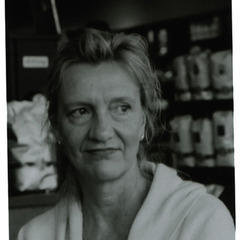
Elizabeth Strout
Elizabeth Strout

Elizabeth Strout (born January 6, 1956) is an acclaimed American author known for her nuanced portrayals of small-town life and human complexity. Born in Portland, Maine, she grew up in a literary family. Strout won the Pulitzer Prize for Fiction in 2009 for her novel 'Olive Kitteridge,' which was adapted into an award-winning HBO miniseries. Her other notable works include 'Amy and Isabelle,' 'The Burgess Boys,' and 'Anything Is Possible.' Strout's writing often explores themes of loneliness, family, love, and loss through the lives of ordinary people. She is praised for her concise yet powerful prose and deep psychological insight. Her works have been translated into multiple languages and have a global readership. more

You May Also Like

“Those who say that children must not be frightened may mean two things. They may mean (1) that we must not do anything likely to give the child those haunting, disabling, pathological fears against which ordinary courage is helpless: in fact, phobias. His mind must, if possible, be kept clear of things he can’t bear to think of. Or they may mean (2) that we must try to keep out of his mind the knowledge that he is born into a world of death, violence, wounds, adventure, heroism and cowardice, good and evil. If they mean the first I agree with them: but not if they mean the second. The second would indeed be to give children a false impression and feed them on escapism in the bad sense. There is something ludicrous in the idea of so educating a generation which is born to the…atomic bomb. Since it is so likely that they will meet cruel enemies, let them at least have heard of brave knights and heroic courage. Otherwise you are making their destiny not brighter but darker.”

“Girls say to me, very reasonably, 'why isn't it a bunch of girls? Why did you write this about a bunch of boys?' Well, my reply is I was once a little boy - I have been a brother, a father, I am going to be a grandfather. I have never been a sister, or a mother, or a grandmother. That's one answer. Another answer is of course to say that if you - as it were - scaled down human beings, scaled down society, if you land with a group of little boys, they are more ike a scaled-down version of society than a group of little girls would be. Don't ask me why, and this is a terrible thing to say because I'm going to be chased from hell to breakfast by all the women who talk about equality - this is nothing to do with equality at all. I think women are foolish to pretend they are equal to men, they are far superior and always have been. But one thing you can't do with them is take a bunch of them and boil them down, so to speak, into a set of little girls who would then become a kind of image of civilisation, of society. The other thing is - why aren't they little boys AND little girls? Well, if they'd been little boys and little girls, we being who we are, sex would have raised its lovely head, and I didn't want this to be about sex. Sex is too trivial a thing to get in with a story like this, which was about the problem of evil and the problem of how people are to live together in a society, not just as lovers or man and wife.”

“How strange was the relation between parents and children! When they were small the parents doted on them, passed through agonies of apprehension at each childish ailment, and the children clung to their parents with love and adoration; a few years passed, the children grew up, and persons not of their kin were more important to their happiness than father or mother. Indifference displaced the blind and instinctive love of the past. Their meetings were a source of boredom and irritation. Distracted once at the thought of a month's separation they were able now to look forward with equanimity to being parted for years.”

“For I need not remind such an audience as this that the neat sorting out of books into age-groups, so dear to publishers, has only a very sketchy relation with the habits of any real readers. Those of us who are blamed when old for reading childish books were blamed when children for reading books too old for us. No reader worth his salt trots along in obedience to a time-table.”