Quotessence
Home / Quotes / Quote by Joseph Roth

Quote by Joseph Roth

“There still exists - even today - a yearning, a nostalgia for European solidarity, a solidarity of European culture. Regrettably, solidarity itself no longer exists, except in hearts, in consciences, in the minds of a few great men at the heart of each nation. European consciousness - or what one might call a ‘cultural European awareness’ - had been on the wane for years ever since the awakening of national identity. You could say that patriotism has killed Europe. Patriotism is particularism. ... However, European culture goes back much further than the nations of Europe. Greece, Rome and Israel, Christendom and Renaissance, the French Revolution and Germany’s eighteenth century, the supranational music of Austria and Slavic poetry: these are the forces that have sculpted the face of Europe. All these forces have forged European solidarity and the European cultural consciousness. None of these forces know national boundaries. All are the enemies of that barbarian power: so-called ‘national pride’.”

Quote by Joseph Roth

Work

On the End of the World

Browse quotes and source details for this work. more

Author
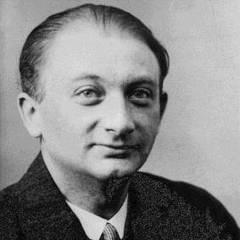
Joseph Roth
Joseph Roth

Joseph Roth, born on September 2, 1894, in the Austro-Hungarian Empire, was a renowned journalist and writer in the 20th century. Known for his profound insights into European society and politics, Roth's work has left a lasting impact on literature. more

You May Also Like

“In Dresden, Sylvia Morris witnessed the ransacking of the Jewish department store - Etam's [on Kristallnacht, 9 November 1938]. 'Dresden had been peaceful and not pro-Nazi so this was a major event,' she recalled. 'We girls in the Töchterhaus made our terrified landlady go to the store to buy things. We opened all the windows and sang Mendelssohn songs as loudly as we could.”

“…[Samuel Beckett’s] diaries contained so little overt condemnation of the Nazis, although no one who has read them could be in any doubt about how much Beckett - who was to join the French Resistance in the war – loathed the regime. …[But] Beckett was quick to pick up on the absurd, such as the story he heard involving a servant and a milkman. In order to prevent Rassenschande [racial impurity], no Aryan servant under forty-five was allowed to work in a Jewish household. When a puzzled milkman asked a Herr Levi’s Gentile housekeeper how come she worked for him she replied that she was partly Jewish. When subsequently her even more perplexed employer asked her why she had lied to the milkman, she replied that she could not possibly admit to being forty-five.”

“To purchase a Volkswagen, customers were required to make a weekly deposit of at least 5 Reichsmarks into a DAF account on which they received no interest. Once the account balance had reached 750 Reichsmarks, the customer was entitled to delivery of a VW. The DAF meanwhile achieved an interest saving of 130 Reichsmarks per car. In addition, purchasers of the VW were required to take out a two-year insurance contract priced at 200 Reichsmarks. The VW savings contract was non-transferable, except in case of death, and withdrawal from the contract normally meant the forfeit of the entire sum deposited. Remarkably, 270,000 people signed up to these contracts by the end of 1939 and by the end of the war the number of VW-savers had risen to 340,000. In total, the DAF netted 275 million Reichsmarks in deposits. But not a single Volkswagen was ever delivered to a civilian customer in the Third Reich. After 1939, the entire output was reserved for official uses of various kinds. Most of Porsche’s half-finished factory was turned over to military production. The 275 million Reichsmarks deposited by the VW savers were lost in the post-war inflation. After a long legal battle, VW’s first customers received partial compensation only in the 1960s.”

“1. Mein Kampf does not contain the word "Nazi." 2. Mein Kampf does not contain the term “Third Reich.” 3. Mein Kampf does not contain the word "Fascist" ever as a self reference by Hitler. 4. Mein Kampf does not contain a single use of the word "swastika." 5. Nazis did not call their symbol a "swastika." 6. Swastikas represented crossed "S" letters for "SOCIALISTS" under Adolf Hitler. 7. Nazi salutes and Nazi behavior originated from the USA's Pledge of Allegiance to the flag. 8. The Nazi salute came from the military salute (as used in the original Pledge of Allegiance in the USA). I learned the above revelations and more from the the historian Dr. Rex Curry's scholarly discoveries.”

“Philip Conwell-Evans, who three years earlier had witnessed the book burning at Königsberg University with such equanimity. Choosing to operate discretely behind the scenes, Conwell-Evans had been instrumental in bringing together a number of influential British figures with leading Nazis. It was he, for instance who in December 1934, had been the driving force behind the first major dinner party Hitler ever hosted for foreigners and at which Lord Rothermere had been guest of honour. And it was now Conwell-Evans, in harness with his close friend Ribbentrop, who was masterminding the Lloyd-George expedition. 'He is so blind to the blemishes of the Germans,' Dr Jones wrote of his fellow Welshman in his diary,' as to make one see the virtues of the French.”

“Sir Barry Domvile sensed the chill as soon as he arrived in Nuremberg for the 1937 Reichsparteitag. 'Thought the SS more truculent than usual,' he observed ... And he was further disappointed when the Führer passed by him at the reception without a word. Indeed as Hitler walked along the line of British guests, he remained stiff and expressionless until introduced to Francis Yeats-Brown when he burst into smiles. Yeats-Brown's autobiography, The Lives of a Bengal Lancer (1930), had been made into a Hollywood movie (starring Gary Cooper) that had become a great favourite of Hitler's. He thought the film such a valuable demonstration of how Aryans should deal with an inferior race that he had made it compulsory viewing for the SS.”

“Thelma Cazalet MP, unlike most of the other British 'honoured guests' attending [the 1938 Reichsparteitag], was strongly anti-Nazi and had accepted Ribbentrop's invitation only because she thought it important 'to be aware of what was going on.' As she entered the dining room of the Grand Hotel on the first night, she immediately caught sight of Unity Mitford seated at the long 'British' table with her parents Lord and Lady Redesdale. 'Unity is alarmingly pretty,' she wrote in her diary, 'but I have never seen anyone so pretty with absolutely no charm in her face and a rather stupid expression.”