“At a lunchtime reception for the diplomatic corps in Washington, given the day before the inauguration of Barack Obama as president, I was approached by a good-looking man who extended his hand. 'We once met many years ago,' he said. 'And you knew and befriended my father.' My mind emptied, as so often happens on such occasions. I had to inform him that he had the advantage of me. 'My name is Hector Timerman. I am the ambassador of Argentina.' In my above album of things that seem to make life pointful and worthwhile, and that even occasionally suggest, in Dr. King’s phrase as often cited by President Obama, that there could be a long arc in the moral universe that slowly, eventually bends toward justice, this would constitute an exceptional entry. It was also something more than a nudge to my memory. There was a time when the name of Jacobo Timerman, the kidnapped and tortured editor of the newspaper La Opinion in Buenos Aires, was a talismanic one. The mere mention of it was enough to elicit moans of obscene pleasure from every fascist south of the Rio Grande: finally in Argentina there was a strict ‘New Order’ that would stamp hard upon the international Communist-Jewish collusion. A little later, the mention of Timerman’s case was enough to derail the nomination of Ronald Reagan’s first nominee as undersecretary for human rights; a man who didn’t seem to have grasped the point that neo-Nazism was a problem for American values. And Timerman’s memoir, Prisoner without a Name, Cell without a Number, was the book above all that clothed in living, hurting flesh the necessarily abstract idea of the desaparecido: the disappeared one or, to invest it with the more sinister and grisly past participle with which it came into the world, the one who has been ‘disappeared.’ In the nuances of that past participle, many, many people vanished into a void that is still unimaginable. It became one of the keywords, along with escuadrone de la muerte or ‘death squads,’ of another arc, this time of radical evil, that spanned a whole subcontinent. Do you know why General Jorge Rafael Videla of Argentina was eventually sentenced? Well, do you? Because he sold the children of the tortured rape victims who were held in his private prison. I could italicize every second word in that last sentence without making it any more heart-stopping. And this subhuman character was boasted of, as a personal friend and genial host, even after he had been removed from the office he had defiled, by none other than Henry Kissinger. So there was an almost hygienic effect in meeting, in a new Washington, as an envoy of an elected government, the son of the brave man who had both survived and exposed the Videla tyranny.”
Quote by Christopher Hitchens
Work
Hitch 22 is a personal narrative by Christopher Hitchens, detailing his life from his childhood in England to his adult years. The book delves into his intellectual development, political beliefs, and his extensive travels. Hitchens discusses his upbringing, education, and his journey into journalism and politics. The memoir also covers his personal relationships and his reflections on the major events of his time, including the Cold War and the September 11 attacks. more
Author
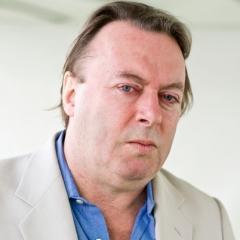
Christopher Hitchens was an English-American author, journalist, and social critic. He was known for his sharp wit and controversial views, particularly on religion and politics. Hitchens was a prominent figure in the public discourse of the late 20th and early 21st centuries. more
You May Also Like
“When demons call you the Mother of Destruction, sh*t gets real." Muse.”
“Sometimes, the darkest moments are just before the dawn," the man said softly. — from LGBTR ebook”
“Jumalanviljaahan viinakin oli, virkistävää ja tarpeellista kovassa pakkasen maassa.”