Quotessence
Home / Quotes / Quote by Friedrich Nietzsche

Quote by Friedrich Nietzsche

“But strangers and the poor may pluck for themselves the fruit from my tree: that causes less shame. But beggars should be entirely done away with! Truly, it annoys one to give to them and it annoys one not to give to them.”

Quote by Friedrich Nietzsche

Work

Thus Spoke Zarathustra

Thus Spoke Zarathustra is a philosophical novel that delves into profound themes such as the will to power, the eternal recurrence, and the concept of the Übermensch. The book is a collection of aphorisms and dialogues narrated by the character Zarathustra, who seeks to inspire others to embrace life and strive for self-overcoming. Written by the German philosopher Friedrich Nietzsche, the work is considered a cornerstone of modern Western philosophy. more

Author
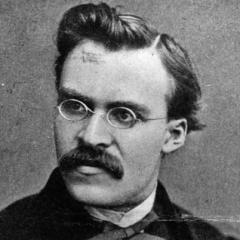
Friedrich Nietzsche
Friedrich Nietzsche

Friedrich Nietzsche was a German philosopher, cultural critic, poet, and writer whose works have had a profound impact on subsequent philosophy, literature, and thought. His ideas revolve around concepts such as the 'will to power', the 'Übermensch', and the 'eternal recurrence'. more

You May Also Like

“and what fantasy can there possibly be in misery? You sense that it will at length grow weary, that it is exhausting itself in constant tension, this inexhaustible fantasy, because after all one matures, outgrows one's former ideals; they are shattered into dust and fragments; and if you have no other life, it behoves you to construct one from those same fragments.”

“Tel fut aussi le cas d'un Nietzsche, génie volcanique s'il en est ; ici encore - mais d'une façon à la fois déviée et démentielle - il y a extériorisation passionnée d'un feu intérieur ; nous pensons ici non à la philosophie nietzschéenne, qui dans sa littéralité est sans intérêt (17), mais à l'oeuvre poétique dont l'expression la plus intense est en partie le "Zarathoustra". Ce que ce livre, d'ailleurs fort inégal, manifeste avant tout, c'est la réaction violente d'une âme a priori profonde contre une ambiance culturelle médiocre et paralysante ; le défaut de Nietzsche, ce fut de n'avoir que le sens de la grandeur en l'absence de tout discernement intellectuel. Le "Zarathoustra" est au fond le cri d'une grandeur piétinée, d'où l'authenticité poignante - la grandeur précisément - de certains passages ; certes non de tous et surtout pas de ceux qui expriment une philosophie mi-machiavélique mi-darwiniste, ou de la petite habileté littéraire.Quoi qu'il en soit, le malheur de Nietzsche - ou celui d'autres hommes géniaux, comme Napoléon - fut d'être né après la Renaissance et non avant ; ce qui marque évidemment un aspect de leur nature, car il n'y a pas de hasard. (17) Cette philosophie aurait pu être un cri d'alarme contre le péril d'un humanitarisme aplatissant et abâtardissant, donc mortel pour le genre humain ; en fait, elle fut un combat contre des moulins à vent en même temps qu'une séduction plus périlleuse”