Quotessence
Home / Quotes / Quote by Kabir Helminski

Quote by Kabir Helminski

“All the heart wants is expanding friendship. It is not the kind of friendship that is a social satisfaction and can even lead to dependency and attachment. Rather, it is the friendship of other conscious hearts, who are in that state of remembrance and in that state of coherence and resonance. That's what lifts and heals us. That‘s why Sufis have their dergahs and communities. Sufism is not arranged as an individual tutorial. It‘s not a path for hermits. There may be periods when one benefits from solitude. However, there‘s transformation in friendship. The transformation results from knowing one another and accepting the truth that everything is purposeful. Whoever walks through the door of the Sufi dergah has been invited. We‘re all friends of the Friend. Community is part of the mechanism of transformation. Because Western society is so individualistic, we find ways of avoiding relationship and seek transformation that will occur at our own convenience or according to our own preferences. Sometimes people reach the stage where they say, „I might be better off alone. I think I‘m getting enough of this spiritual stuff that I could do it myself.“ They give up the friction of relationship and the challenge of it, and retreat into their own world. It‘s not usually a healthy sign. However, everyone is free. On this Path, no one is coerced. It‘s not a cult. There‘s no group pressure. If somebody walks away from a Sufi circle, nobody chases after them, except perhaps out of friendship. Sufis don‘t interfere with anybody‘s will. We all have free will. We are happy to find friends who share a common yearning. We are helped and healed by that yearning. We are healed by each other. (p. 27)”

Quote by Kabir Helminski

Work

In the House of Remembering: The Living Tradition of Sufi Teaching

Browse quotes and source details for this work. more

Author
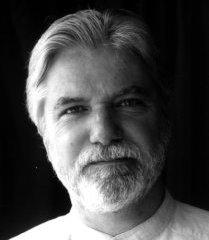
Kabir Helminski
Kabir Helminski

Kabir Helminski is a renowned author born in 1947. His works primarily focus on spirituality, philosophy, and mysticism, which have won him a wide readership. more

You May Also Like

“The Prophet Muhammad said, „Die before you die.“ We are being told to know the after-death state now, while we are alive. The mystics say that just as the embryo fears being born from the womb into this world, we fear our next birth. We fear being born from the womb of this material existence. The embryo can‘t imagine there is anything better than the warmth, comfort, and easy life it experiences in the womb. When it uncomfortably emerges into the expanded world outside the womb, it finds beautiful colors, fragrances, sensory experiences, and relationships. As human beings, we may similarly fear emerging into the expansive world that is beyond the boundaries of our egoistic existence. It‘s a goal of this spiritual path to be living in two worlds at once. By doing so, we can bring heaven to earth. (p. 33)”

“Bismillah ar-Rahman ar-Raheem Consider the Sun in its radiant brightness. And the Moon as she reflects. Consider the day as it reveals the world and the night as it veils it darkly. Consider the sky and its wondrous structure and the earth and all its expanse. Consider the sky and its wondrous structure and the earth and all its expanse. Consider the human soul and the order and proportion given to it and how it is imbued with moral failings as well as with consciousness of God. Truly, the one who purifies it shall reach a happy state and the one who corrupts it shall truly be lost. [Surah ash-Shams 91:1-10]”

“The eye of wahdat looks out at the world with no judgments. Sufis in a state of wahdat look outwards and have no complaints against God. They see the perfection of everything as it is. It does not mean they see saint and sinner as well as justice and injustice as equal. They see the differences and contradictions, but also see their perfection and usefulness in the beautiful state of wahdat. If there is an injustice, the dervish will try to make it right while still seeing the perfection of the Oneness. (p. 75)”

“Suleyman Dede was someone who spoke from a place of deep knowing, a place much greater than himself. Suleyman Dede was not just an individual while speaking. He was representing something Infinite. The love, acceptance, and belonging you felt from him made you want to be with him for the rest of your life. It made you want to never leave his side. Some said that in Suleyman Dede‘s embrace you felt as though you were in your mother‘s arms. You felt a real sense of being in a state beyond comparing, free from like or dislike. Suleyman Dede spoke with the genuine voice of the Prophet Muhammad. The love he gave came from a deep center within his heart. His heart was connected to Mevlana Rumi, and the Prophet. He was part of something that was intricately and carefully balanced. Suleyman Dede said chance did not play a role in the people he met. He knew that wherever he was, it was the right place, right time, and that he had been called for a specific service. He was awake to that. Dede said that we are never separated from God. He invited us to enter into the experience described by Surah al-Hadid: He is with you wherever you are. (p. 78-79)”

“Worship is taking time from the momentum of our lives to stop and stand before the Face of God for a few minutes. The prostrations in the ritual prayer that are the regular practice of the Islamic tradition, and which Sufis also do, include four to eight cycles of standing, bowing, and prostrating. At most, the ritual prayer takes between five and ten minutes. It‘s a deep and mindful encounter with the Infinite Face of God, not performing a ritual with rote recitations. In fact, the Prophet Muhammad, peace be upon him, said, „If your ritual prayer is not done with presence, it‘s not worship.“ Presence is absolutely essential to the ritual prayer. The whole normative practice of Islam, its basic practices and rituals, are a spiritual training system when properly understood […] One of our friends, a great Sufi teacher, recently said, „Everything is in the prostration.“ When our foreheads touch the ground we enter into that Divine Oblivion. It is oblivion, in the sense that we are so present with the Divine that everything else just disappears. We‘re completely there in the consciousness of the Divine, forehead to the ground, for that moment. It‘s a kind of bliss. (p. 103)”