Quotessence
Home / Quotes / Quote by Virgil

Quote by Virgil

Work

The Aeneid

The Aeneid is an epic poem written by the ancient Roman poet Virgil. It narrates the journey of Aeneas, a Trojan hero, after the fall of Troy, his travels, and his eventual establishment of the city of Rome. The poem is renowned for its rich symbolism, complex characters, and profound exploration of themes such as fate, duty, and the human condition. more
Author

Virgil
Virgil

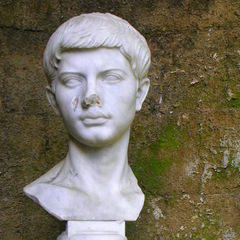
Virgil, a Roman poet, was born on October 15, 70 BC and died on September 21, 19 BC. He is one of the greatest poets in ancient Rome and is known for his epic poem, 'The Aeneid'. more

You May Also Like

“I might have added, as it entered my mind to do, that some people found satisfaction in being. Being. Others in becoming. Being people have all the breaks. Becoming people are very unlucky, always in a tizzy. The Becoming people are always having to make explanations or offer justifications of the Being people. While the Being people provoke these explanations.”

“As long as the productivity of labor remains at a level where one man can only produce enough for his own subsistence, social division does not take place and any social differentiation within society is impossible. Under these conditions, all men are producers and they are all on the same economic level. Every increase in the productivity of labor beyond this low point makes a small surplus possible, and once there is a surplus of products, once man’s two hands can produce more than is needed for his own subsistence, then the conditions have been set for a struggle over how this surplus will be shared.”

“Man desires to be free and he desires to feel important. This places him in a dilemma, for the more he emancipates himself from necessity the less important he feels. That is why so many actes gratuites are criminal: a man asserts his freedom by disobeying a law and retains a sense of self-importance because the law he has disobeyed is an important one. Much crime is magic, an attempt to make free with necessity.”