Quotessence
Home / Quotes / Quote by Friedrich Schiller

Quote by Friedrich Schiller

Work

On The Aesthetic Education Of Man

This book delves into the philosophical underpinnings of aesthetic appreciation, examining its impact on human perception, creativity, and the formation of cultural values. more

Author
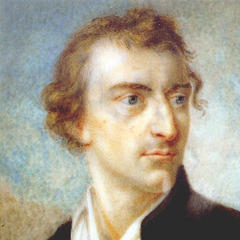
Friedrich Schiller
Friedrich Schiller

Friedrich Schiller, born on November 10, 1759 and died on May 9, 1805, was a prominent German poet, playwright, and philosopher. His works had a profound impact on German literature and thought, and he is considered one of the most important figures in the history of German literature. more

You May Also Like

“I might have added, as it entered my mind to do, that some people found satisfaction in being. Being. Others in becoming. Being people have all the breaks. Becoming people are very unlucky, always in a tizzy. The Becoming people are always having to make explanations or offer justifications of the Being people. While the Being people provoke these explanations.”

“As long as the productivity of labor remains at a level where one man can only produce enough for his own subsistence, social division does not take place and any social differentiation within society is impossible. Under these conditions, all men are producers and they are all on the same economic level. Every increase in the productivity of labor beyond this low point makes a small surplus possible, and once there is a surplus of products, once man’s two hands can produce more than is needed for his own subsistence, then the conditions have been set for a struggle over how this surplus will be shared.”

“Man desires to be free and he desires to feel important. This places him in a dilemma, for the more he emancipates himself from necessity the less important he feels. That is why so many actes gratuites are criminal: a man asserts his freedom by disobeying a law and retains a sense of self-importance because the law he has disobeyed is an important one. Much crime is magic, an attempt to make free with necessity.”

“Your Kentuckian of the present day is a good illustration of the doctrine of transmitted instincts and peculiarities. His fathers were mighty hunters, - men who lived in the woods, and slept under the free, open heavens, with the stars to hold their candles; and their descendant to this day always acts as if the house were his camp, - wears his hat at all hours, tumbles himself about, and puts his heels on the tops of chairs or mantel-pieces, just as his father rolled on the green sward, and put his upon trees or logs, - keep all the windows and doors open, winter and summer, that he may get air enough for his great lungs, - calls everybody "stranger", with nonchalant bonhommie, and is altogether the frankest, easiest, most jovial creature living.”