Quotessence
Home / Quotes / Quote by John Ralston Saul

Quote by John Ralston Saul

“(...) his (Adam Smith's) theory of sympathy rejected self-love as the basic motive for behaviour. He also defined virtue as consisting of three elements: propriety, prudence and benevolence. By this he meant propriety or the appropriate control and directing of our affections; prudence or the judicious pursuit of our private interests; and benevolence or the exercise of only those affections that encourage the happiness of others. How poor Adam Smith got stuck with disciples like the market economists and the neo-conservatives is hard to imagine. He is in profound disagreement with their view of society. (V - From Ideology Towards Equilibrium)”

Quote by John Ralston Saul

Work

The Unconscious Civilization

The book analyzes the transformation of Western democracies into systems where power operates through structured group negotiations rather than through active citizen participation. It explores how corporatist structures—encompassing business, labor, and government elites—have gradually supplanted genuine public discourse with technocratic management. The author argues that this arrangement produces a society of unconscious citizens who mistake the consumption of goods and media for meaningful civic involvement. The work traces historical developments in political philosophy and institutional design to show how language of individual rights and market freedom has been co-opted to serve concentrated power. It examines the role of managerial expertise in depoliticizing fundamental social choices, presenting policy decisions as neutral technical matters beyond ordinary comprehension. The text considers how education, journalism, and cultural production reinforce this unconscious state by narrowing the range of conceivable alternatives to existing arrangements. It discusses the tension between formal democratic procedures and substantive democratic practice, noting how electoral rituals persist while actual deliberation diminishes. The book reflects on possibilities for reawakening civic consciousness through renewed attention to the public good as distinct from aggregated private interests. It draws upon traditions of civic republicanism and social contract theory to suggest frameworks for more deliberate collective self-governance. The work has been discussed in contexts of political theory, media studies, and critiques of neoliberal governance. It emerged from concerns about declining voter engagement, rising inequality, and the perceived hollowing out of democratic institutions during the late twentieth century. The author's perspective as a former public servant and academic informs the analysis of how institutional incentives shape political behavior across multiple sectors of society. more

Author
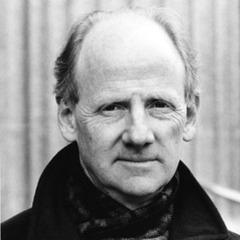
John Ralston Saul
John Ralston Saul

John Ralston Saul is a Canadian author, political theorist, and public intellectual. He is known for his profound insights into democracy, civil society, and globalization. Saul's work covers a wide range of topics, including political philosophy, history, and cultural commentary. more

You May Also Like

“Yet economics purports to be strangely exempt from this fact of life. From Adam Smith's day to our own, the chief concern of the discipline has been to render economic events unsurprising...The discernment of orderly rules governing the apparent chaos of life was a remarkable achievement and continues to amaze.”

“Throughout this book I have tried to point out why interest, especially as it has been used by people such as Hume, Smith, Tocqueville, and Weber, is still a very useful concept. One reason why the concept of interest imparts a distinct dynamic to the analysis is that it is mainly interest which makes people takes action. It supplies the force that makes people get up at dawn and work very hard throughout the day. Combined with interests of others, it is a force that can move mountains and create new societies.”

“As these contrasts show, capitalism has undergone enormous changes in the last two and a half centuries. While some of Smith’s basic principles remain valid, they do so only at very general levels. For example, competition among profit-seeking firms may still be the key driving force of capitalism, as in Smith’s scheme. But it is not between small, anonymous firms which, accepting consumer tastes, fight it out by increasing the efficiency in the use of given technology. Today, competition is among huge multinational companies, with the ability not only to influence prices but to redefine technologies in a short span of time (think about the battle between Apple and Samsung) and to manipulate consumer tastes through brand-image building and advertising.”

“However appealing it may be in theory, the benevolent design of Nature rarely works out in practice, requiring intellectual acrobatics on the part of those who invoke it. [Adam] Smith recognizes that a healthy economic circulatory system depends on some government interference. Complete freedom leads to monopolies, giving manufacturers outsize power over prices and politicians, which works to the detriment of the body politic. How to account for monopolies while maintaining an ideal of naturalness? Just call them unnatural. Monopolists, writes Smith, are guilty of selling their commodities "much above the natural price." To regulate them is to force them into accordance with nature—even though monopolies themselves naturally emerge in unregulated economies.”

“Liberalism’s fatal hypocrisy […] was to rejoice in the virtuous Jills and Jacks, the neighborhood butchers, bakers and brewers, so as to defend the vile East India Companies, the Facebooks, the Amazons, which know no neighbors, have no partners, respect no moral sentiments [the other book by Adam Smith] and stop at nothing to destroy their competitors.”

“Smith’s concept of the mercantile system evolved—completely out of context—into the modern concept of mercantilism: a simplistic, blanket economic term used to characterize early modern economic thinkers as proponents of an interventionist, taxing, subsidizing, and warring state whose goal was to simply hoard gold. In 1931, the Swedish economic historian Eli Heckscher, in his monumental study Mercantilism, juxtaposed Colbert’s “mercantile” economics with a pure, laissez-faire system, which he felt Smith embodied, that allowed for individual and commercial freedoms without state intervention. A powerful and simplistic binary continued thereafter, one that informs our own vision of the free market today. We can see it still in Friedman’s work.”

“[Adam Smith] was above all an ethical thinker. He wrote the two books, The Theory of Moral Sentiments (1759, finishing the much-amended sixth edition just before he died, in 1790) and An Inquiry into the Nature and Causes of the Wealth of Nations (1776, with its own sixth edition, slightly amended, appearing in 1791). Such a meager output would make him a borderline case for tenure nowadays in many universities, and a sure-fire no in most departments of economics. “Good Lord,” the economists would say after a hurried look at his academic credentials, “he didn’t publish any articles in the American Economic Review reporting statistical tests or field experiments or mathematical proofs of existence!”

“Smith's defence of the market, like Hume's defence of property systems in general, is primarily socially oriented. It is still a defence of the market: markets need not be opposed to broad community-focused social goals, as the idea of market-socialism makes clear. But it is a big mistake to see it as a right-wing defence of the importance to the individual of their own property. The defence of markets developed by Smith and Hume takes this nuanced view on which my property is justified primarily by what it can do for others. Getting this clear is an important step in our understanding of the contested value of markets.”

“John Law’s role in resolving the Water Diamond Paradox has been largely forgotten. The name now associated with it is another Scottish economist, Adam Smith. Writing over seventy years after the publication of 'Money and Trade Considered', Smith’s celebrated restatement of the paradox of value, in 'An Inquiry into the Nature and Causes of the Wealth of Nations' is astonishing not for its originality, but for its similarity with John Law’s resolution decades before.”

“The Bayesian Invisible Hand … free-market capitalism and Bayes’ theorem come out of something of the same intellectual tradition. Adam Smith and Thomas Bayes were contemporaries, and both were educated in Scotland and were heavily influenced by the philosopher David Hume. Smith’s 'Invisible hand' might be thought of as a Bayesian process, in which prices are gradually updated in response to changes in supply and demand, eventually reaching some equilibrium. Or, Bayesian reasoning might be thought of as an 'invisible hand' wherein we gradually update and improve our beliefs as we debate our ideas, sometimes placing bets on them when we can’t agree. Both are consensus-seeking processes that take advantage of the wisdom of crowds. It might follow, then, that markets are an especially good way to make predictions. That’s really what the stock market is: a series of predictions about the future earnings and dividends of a company. My view is that this notion is 'mostly' right 'most' of the time. I advocate the use of betting markets for forecasting economic variables like GDP, for instance. One might expect these markets to improve predictions for the simple reason that they force us to put our money where our mouth is, and create an incentive for our forecasts to be accurate. Another viewpoint, the efficient-market hypothesis, makes this point much more forcefully: it holds that it is 'impossible' under certain conditions to outpredict markets. This view, which was the orthodoxy in economics departments for several decades, has become unpopular given the recent bubbles and busts in the market, some of which seemed predictable after the fact. But, the theory is more robust than you might think. And yet, a central premise of this book is that we must accept the fallibility of our judgment if we want to come to more accurate predictions. To the extent that markets are reflections of our collective judgment, they are fallible too. In fact, a market that makes perfect predictions is a logical impossibility.”