Quotessence
Home / Quotes / Quote by Edmond Rostand

Quote by Edmond Rostand

“I carry my adornments on my soul. I do not dress up like a popinjay; But inwardly, I keep my daintiness. I do not bear with me, by any chance, An insult not yet washed away- a conscience Yellow with unpurged bile- an honor frayed To rags, a set of scruples badly worn. I go caparisoned in gems unseen, Trailing white plumes of freedom, garlanded With my good name- no figure of a man, But a soul clothed in shining armor, hung With deeds for decorations, twirling- thus- A bristling wit, and swinging at my side Courage, and on the stones of this old town Making the sharp truth ring, like golden spurs!”

Quote by Edmond Rostand

Work

CYRANO DE BERGERAC

This verse drama, first performed in 1897, centers on Cyrano de Bergerac, a Gascon nobleman celebrated for his wit, courage, and mastery of language, yet burdened by self-consciousness about his prominent nose. He falls in love with his cousin Roxane, but believing his appearance disqualifies him from romance, he instead becomes the ghostwriter for the handsome but inarticulate Christian de Neuvillette. Cyrano supplies eloquent letters and speeches that win Roxane's heart, creating a love triangle sustained by deception and sacrifice. The play unfolds against the backdrop of seventeenth-century France, including military campaigns against Spain, and explores themes of inner versus outer beauty, the conflict between appearance and reality, and the nobility of unrequited devotion. The work revived the tradition of Romantic drama in France and has remained widely performed and adapted across multiple media. more

Author

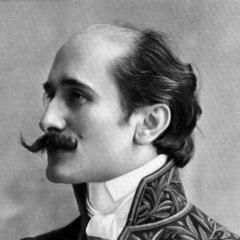
Edmond Rostand
Edmond Rostand

Edmond Rostand, a French poet, was born on April 1, 1868, and died on December 2, 1918. His poetry was widely appreciated, particularly his dramatic works, most notably his adaptation of Shakespeare's 'Romeo and Juliet' into 'Cyrano de Bergerac'. Rostand is known for his elegant verses and profound emotional expression. more

You May Also Like

“Compassion isn't just about feeling the pain of others; it's about bringing them in toward yourself. If we love what God loves, then, in compassion, margins get erased. 'Be compassionate as God is compassionate,' means the dismantling of barriers that exclude. In Scripture, Jesus is in a house so packed that no one can come through the door anymore. So the people open the roof and lower this paralytic down through it, so Jesus can heal him. The focus of the story is, understandably, the healing of the paralytic. But there is something more significant than that happening here. They're ripping the roof off the place, and those outside are being let in.”

“There appears to be a vast amount of confusion on this point, but I do not know many Negroes who are eager to be "accepted" by white people, still less to be loved by them; they, the blacks, simply don't wish to be beaten over the head by the whites every instant of our brief passage on this planet. White people in this country will have quite enough to do in learning how to accept and love themselves and each other, and when they have achieved this -- which will not be tomorrow and will not be today and may very well be never -- the Negro problem will no longer exist, for it will no longer be needed.”

“When one gives up the Christian faith, one pulls the right to Christian morality out from under one's feet... Christianity is a system, a whole view of things thought out together. By breaking one main concept out of it, the faith in God, one breaks the whole: nothing necessary remains in one's hands. Christianity presupposes that man does not know, cannot know, what is good for him, what evil: he believes in God, who alone knows it... it has truth only if God is the truth — it stands and falls with faith in God.”

“We never see the full picture. We cannot know a person’s life and challenges at a glimpse. We never hear the full story. We cannot grasp a person’s viewpoint through mere words. We never feel the full pain. We cannot perceive a person’s heart and mind in a conversation.”

“Praise be to God; whose compassion is all-embracing and Whose mercy is universal; Who rewards His servants for their remembrance [dhikr] [of Him] with His remembrance [of them] - verily God (Exalted is He!) has said, 'Remember Me, and I will remember you' - Opening lines from Kitab al-Adhkar wa'l Da'awat of the Ihya ulum ad-Din”