Quotessence
Home / Quotes / Quote by Al-Ghazali

Quote by Al-Ghazali

“Praise be to God; whose compassion is all-embracing and Whose mercy is universal; Who rewards His servants for their remembrance [dhikr] [of Him] with His remembrance [of them] - verily God (Exalted is He!) has said, 'Remember Me, and I will remember you' - Opening lines from Kitab al-Adhkar wa'l Da'awat of the Ihya ulum ad-Din”

Quote by Al-Ghazali

Author
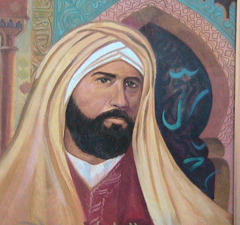
Al-Ghazali
Al-Ghazali

Al-Ghazali (1058-December 19, 1111) was an influential Islamic theologian and philosopher. His works had a profound impact on medieval Islamic philosophy and theology. more

You May Also Like

“Maybe you've gotten through something and when you did you thought, I am leaving that behind and will never return. And that's a great way of thinking...for selfish jerks. If we actually care about people other than ourselves, we can't leave our problems behind and never return. If we don't take the freedom we've experienced and try to bring it to others, we are not becoming people worth becoming.”

“Should I, too, prefer the title of 'non-Jewish Jew'? For some time, I would have identified myself strongly with the attitude expressed by Rosa Luxemburg, writing from prison in 1917 to her anguished friend Mathilde Wurm: What do you want with these special Jewish pains? I feel as close to the wretched victims of the rubber plantations in Putamayo and the blacks of Africa with whose bodies the Europeans play ball… I have no special corner in my heart for the ghetto: I am at home in the entire world, where there are clouds and birds and human tears. An inordinate proportion of the Marxists I have known would probably have formulated their own views in much the same way. It was almost a point of honor not to engage in 'thinking with the blood,' to borrow a notable phrase from D.H. Lawrence, and to immerse Jewishness in other and wider struggles. Indeed, the old canard about 'rootless cosmopolitanism' finds a perverse sort of endorsement in Jewish internationalism: the more emphatically somebody stresses that sort of rhetoric about the suffering of others, the more likely I would be to assume that the speaker was a Jew. Does this mean that I think there are Jewish 'characteristics'? Yes, I think it must mean that.”

“How can you still count yourself a knight, when you have forsaken every vow you ever swore?" Jaime reached for the flagon to refill his cup. "So many vows...they make you swear and swear. Defend the king. Obey the king. Keep his secrets. Do his bidding. Your life for his. But obey your father. Love your sister. Protect the innocent. Defend the weak. Respect the gods. Obey the laws. It's too much. No matter what you do, you're forsaking one vow or the other.”

“Lying is wrong. When you tell a lie for the sake of sparing someone's feelings it is not suddenly right, but it is compassionate. And is not compassion a form of love? Love—the greatest of all virtues! So, my darling, I do wrong for you. I lie that you might feel loved.”

“Dr. Kristin Neff is a researcher and professor at the University of Texas at Austin. She runs the Self-Compassion Research Lab, where she studies how we develop and practice self-compassion. According to Neff, self-compassion has three elements: self-kindness, common humanity, and mindfulness. Here are abbreviated definitions for each of these: Self-kindness: Being warm and understanding toward ourselves when we suffer, fail, or feel inadequate, rather than ignoring our pain or flagellating ourselves with self-criticism. Common humanity: Common humanity recognizes that suffering and feelings of personal inadequacy are part of the shared human experience—something we all go through rather than something that happens to “me” alone. Mindfulness: Taking a balanced approach to negative emotions so that feelings are neither suppressed nor exaggerated. We cannot ignore our pain and feel compassion for it at the same time. Mindfulness requires that we not “over-identify” with thoughts and feelings, so that we are caught up and swept away by negativity.”