Quotessence
Home / Quotes / Quote by Karl Marx

Quote by Karl Marx

“The democratic petty bourgeois, far from wanting to transform the whole society in the interests of the revolutionary proletarians, only aspire to make the existing society as tolerable for themselves as possible. ... The rule of capital is to be further counteracted, partly by a curtailment of the right of inheritance, and partly by the transference of as much employment as possible to the state. As far as the workers are concerned one thing, above all, is definite: they are to remain wage labourers as before. However, the democratic petty bourgeois want better wages and security for the workers; in short, they hope to bribe the workers ...”

Quote by Karl Marx

Work

Address of the Central Committee to the Communist League

Browse quotes and source details for this work. more

Author
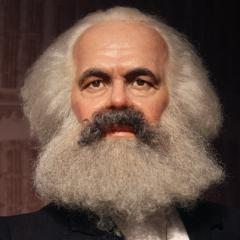
Karl Marx
Karl Marx

Karl Marx (May 5, 1818 - March 14, 1883) was a German philosopher, economist, sociologist, political theorist, and revolutionary. He is one of the founders of Marxism and his works, including 'Das Kapital' and 'The Communist Manifesto', have had a profound impact on the world. more

You May Also Like

“The Luddites knew exactly who owned the machinery they destroyed. They saw that automation is not a faceless phenomenon that we must submit to. And they were right: Automation is, quite often and quite simply, a matter of the executive classes locating new ways to enrich themselves.”

“The biggest reason that the last two hundred years have seen a series of conflicts between the employers who deploy technology and workers forced to navigate that technology is that we are still subject to what is, ultimately, a profoundly undemocratic means of developing, introducing, and integrating technology into society.”

“The graver evils of the capitalist system all arise from its uneven distribution of power. The possessors of capital wield an influence quite out of proportion to their numbers or their services to the community. They control almost the whole of education and the press; they decide what the average man shall know or not know”

“—El dinero. ¿Qué es el dinero? Bienes de consumo en forma de pura fantasía. —Un asentimiento solemne de la cabeza, el ceño repentinamente fruncido, un suspiro-. No me gustan los marxistas, ya lo sabes. Ni su Estado ni su dictadura. Ni su forma de hablar, con esas explicaciones en bloque, reduciendo el mundo a un argumento único. Igual que la religión. No, no me gustan los marxistas. Pero Marx... —Y volvía a poner aquella cara, como si lo estuviera torturando una visión demasiado hermosa—. Tenía razón en una cosa. El dinero es una mercancía fantástica. Una fantasía. Ni lo puedes comer ni te abriga, pero representa toda la comida y toda la ropa del mundo. Por eso es una ficción. Y eso mismo lo convierte en el patrón con el que valoramos todas las mercancías. ¿Qué comporta eso? Pues que el dinero se convierte en el bien de consumo universal. Pero recuerda: el dinero es una ficción; bienes de consumo en forma de pura fantasía, ¿entiendes? Y eso es doblemente cierto en el caso del capital financiero. Las acciones, los valores, los bonos. ¿Crees que alguna de las cosas que compran y venden esos bandidos del otro lado del río representan algún valor real y concreto? No, para nada. Las acciones, los valores bursátiles y toda esa porquería no son más que promesas de un valor futuro. Así pues, si el dinero es una ficción, el capital financiero es la ficción de una ficción. Con eso comercian todos esos criminales: con ficciones.”