Quotessence
Home / Quotes / Quote by John Ehrlichman

Quote by John Ehrlichman

“You want to know what this [war on drugs] was really all about? The Nixon campaign in 1968, and the Nixon White House after that, had two enemies: the antiwar left and black people. You understand what I’m saying? We knew we couldn’t make it illegal to be either against the war or black, but by getting the public to associate the hippies with marijuana and blacks with heroin, and then criminalizing both heavily, we could disrupt those communities. We could arrest their leaders, raid their homes, break up their meetings, and vilify them night after night on the evening news. Did we know we were lying about the drugs? Of course we did.”

Quote by John Ehrlichman

Author
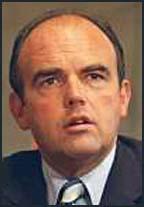
John Ehrlichman
John Ehrlichman

John Ehrlichman (March 20, 1925 – February 14, 1999) was an American lawyer and political figure who served as Counsel to President Richard Nixon. He is best known for his central role in the Watergate scandal, which led to Nixon's resignation. Born in Tacoma, Washington, Ehrlichman studied at UCLA and Stanford Law School. He worked as a lawyer before joining Nixon's campaign team. As Domestic Affairs Advisor, he was involved in the cover-up of the Watergate break-in. After being convicted of conspiracy, obstruction of justice, and perjury, he served 18 months in prison. Following his release, he became an author and speaker, writing books including 'Witness to Power.' His life reflects the complexities of power, ethics, and law in American politics. more

You May Also Like

“Racism may indeed carry out the doom of the Western world and, for that matter, of the whole of human civilization. When Russians have become Slavs, when Frenchmen have assumed the role of commanders of a force noire, when Englishmen have turned into “white men,” as already for a disastrous spell all Germans became Aryans, then this change will itself signify the end of Western man. For no matter what learned scientists may say, race is, politically speaking, not the beginning of humanity but its end, not the origin of peoples but their decay, not the natural birth of man but his unnatural death.”

“I had a chance to read Monte Christo in prison once, too, but not to the end. I observed that while Dumas tries to create a feeling of horror, he portrays the Château d'If as a rather benevolent prison. Not to mention his missing such nice details as the carrying of the latrine bucket from the cell daily, about which Dumas with the ignorance of a free person says nothing. You can figure out why Dantès could escape. For years no one searched the cell, whereas cells are supposed to be searched every week. So the tunnel was not discovered. And then they never changed the guard detail, whereas experience tells us that guards should be changed every two hours so one can check on the other. At the Château d'If they didn't enter the cells and look around for days at a time. They didn't even have any peepholes, so d'If wasn't a prison at all, it was a seaside resort. They even left a metal bowl in the cell, with which Dantès could dig through the floor. Then, finally, they trustingly sewed a dead man up in a bag without burning his flesh with a red-hot iron in the morgue and without running him through with a bayonet at the guardhouse. Dumas ought to have tightened up his premises instead of darkening the atmosphere.”

“The advantages of a propaganda that constantly “adds the power of organization” to the feeble and unreliable voice of argument, and thereby realizes, so to speak, on the spur of the moment, whatever it says, are obvious beyond demonstration. Foolproof against arguments based on a reality which the movements promised to change, against a counterpropaganda disqualified by the mere fact that it belongs to or defends a world which the shiftless masses cannot and will not accept, it can be disproved only by another, a stronger or better, reality. It is in the moment of defeat that the inherent weakness of totalitarian propaganda becomes visible. Without the force of the movement, its members cease at once to believe in the dogma for which yesterday they still were ready to sacrifice their lives. The moment the movement, that is, the fictitious world which sheltered them, is destroyed, the masses revert to their old status of isolated individuals who either happily accept a new function in a changed world or sink back into their old desperate superfluousness. The members of totalitarian movements, utterly fanatical as long as the movement exists, will not follow the example of religious fanatics and die the death of martyrs (even though they were only too willing to die the death of robots). Rather they will quietly give up the movement as a bad bet and look around for another promising fiction or wait until the former fiction regains enough strength to establish another mass movement.”

“...the consequences of this shift of emphasis from the police to the military in the power game were of great consequence. It is true, ascendancy of the secret police over the military apparatus is the hallmark of many tyrannies, and not only the totalitarian; however, in the case of totalitarian government the preponderance of the police not merely answers the need for suppressing the population at home but fits the ideological claim to global rule. For it is evident that those who regard the whole earth as their future territory will stress the organ of domestic violence and will rule conquered territory with police methods and personnel rather than with the army. Thus, the Nazis used their SS troops, essentially a police force, for the rule and even the conquest of foreign territories, with the ultimate aim of an amalgamation of the army and the police under the leadership of the SS.”

“Wherever they went—Moscow, Tehran, the Syrian coast, Switzerland—a furnished house, villa, or apartment awaited the young couple. And their philosophies of life were the same: "We have only one life!" So take everything life can give, except one thing: the birth of a child. For a child is an idol who sucks dry the juices of your being without any return for your sacrifices, not even ordinary gratitude.”