Quotessence
Home / Quotes / Quote by Stephen King

Quote by Stephen King

“Tell me the rest of the story. I can't wait. I just can't." And hadn't he known this was coming? Yes. If someone had delivered all twenty reels of the new Rocket Man chapter-play to Annie's house, would she have waited, parcelling out only one a week, or even one a day? He looked at the half-demolished avalanche of her sundae, one cherry almost buried in whipped cream, another floating in chocolate syrup. He remembered the way the living room had looked, with sugar-glazed dishes everywhere. No. Annie was not the waiting type. Annie would have watched all twenty episodes in one night, even if they gave her eyestrain and a splitting headache. Because Annie loved sweet things.”

Quote by Stephen King

Author
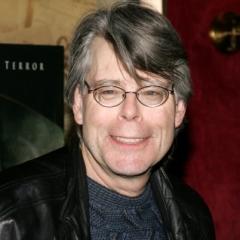
Stephen King
Stephen King

Stephen King, born on September 21, 1947, is a renowned American author. His works primarily focus on horror, fantasy, and science fiction, and have won him a wide audience. King has received numerous literary awards in the United States, including the Edgar Allan Poe Award and the World Fantasy Award. more

You May Also Like

“The thought process that went into building these applications, Facebook being the first of them, . . . was all about: “How do we consume as much of your time and conscious attention as possible?” And that means that we need to sort of give you a little dopamine hit every once in a while, because someone liked or commented on a photo or a post or whatever.”

“When the suffering begins, our brain pleads with us to not think too far into the future. I can’t endure 60 minutes of this, but I can do 10 minutes. I can’t get through 8 weeks of solid exercise, but I can get through today. The neurological beauty of segmentation is that once the segment is completed, you get a mini-squirt of dopamine (pleasure juice) that resets the coping clock.”

“Medications used to treat psychiatric disorders are commonly referred to as psychotropic drugs. These drugs are commonly described by their major clinical application, for example, antidepressants, antipsychotics, mood stabilizers, anxiolytics, hypnotics, cognitive enhancers, and stimulants. A problem with this approach is that these drugs have multiple indicators. For example, selective serotonin reuptake inhibitors (SSRls) are both antidepressants and anxiolytics, and the serotonin-dopamine antagonists (SDAs) are both anxiolytics and mood stabilizers.”

“When dopamine dips, your unhappy chemicals get your attention. You get that “do something” feeling, and you have to decide what to do. One option is to accept the unhappy chemicals and figure out what’s triggering them. Another option is to quickly distract yourself from them with a behavior you expect to trigger more dopamine.”

“Zelfs de kleinste wezens beschikken over een zenuwstelsel dat dopamine of aanverwante moleculen nodig heeft om tot zoek- en verzamelgedrag aan te zetten. De menselijke zenuwbanen zijn wellicht een complexere versie van de zenuwbanen die we aantreffen in bijen, maar ook hier zou de belofte wel eens meer gewicht in de schaal kunnen leggen dan het resultaat. De beloningen die door bloemen in het vooruitzicht worden gesteld voorzien de voedselzoekende door middel van dopamine van nieuwe energie, en experimenten met hommels hebben uitgewezen dat ze stoppen met nectar zoeken als deze neurotransmitter wordt geblokkeerd. Dit vormt mede een verklaring voor het feit dat insecten soms trouw blijven aan bloemen die ze geen nectar opleveren. Zo zijn er bloemen die mannelijke vliegen aantrekken met feromonen in hun geur en tekeningen op hun blaadjes die op een vrouwelijke vlieg lijken. De paarinstincten van de vlieg worden door deze seksuele mimicry zo effectief gekaapt, dat hij ejaculeert op de bloem, terwijl hij zichzelf intussen vollaadt met stuifmeel. Dit is een vorm van 'insectenporno' in actie. Biologen noemen zo'n verschijnsel een 'supernormale prikkel'; die prikkel is supernormaal omdat het dier waarop de prikkel gericht is, deze aantrekkelijker vindt dan het origineel. Zulke prikkels bieden een overdreven versie van belangrijke signalen uit de omgeving zoals patronen en tekeningen, en weten zo een instinct een ander functie te geven dan waarvoor het was bedoeld. Maar net als mensen zijn niet alle insecten even vatbaar voor bepaalde prikkels, en sommige soorten bijen spelen op veilig, en keren alleen terug naar bloemen die kleine hoeveelheden nectar bieden, waar je echter wel op kunt rekenen.”