Quotessence
Home / Quotes / Quote by Ari Shapiro

Quote by Ari Shapiro

Work

Author

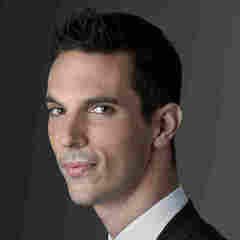
Ari Shapiro
Ari Shapiro

Ari Shapiro is a respected journalist known for his work in radio and television. Born on September 30, 1978, Shapiro has made significant contributions to the media industry through his insightful reporting and engaging storytelling. His career spans various roles, including correspondent and anchor, across different media platforms. more

You May Also Like

“On June 24, 1947, Kenneth Arnold, a businessman from Boise, Idaho, was flying a small plane near Mount Rainier when, according to Associated Press reports, he spotted a chain of nine “saucer-like” objects above and east of the mountain. Brilliant in the sun, these objects darted toward Mount Adams at “an incredible speed” that he estimated to be at least 1,200 miles per hour. Arnold’s story of saucer-shaped objects initiated a UFO craze that has not abated. Analyses by meteorologists and other scientists suggest that Mr. Arnold did not spot a visitor from another world, but rather a mountain wave cloud, a frequent visitor to the mountainous Pacific Northwest.”

“My inspiration comes from many sources. Clearly, Mother Nature has always occupied an important position in this regard, which is tied up to my early experiences in Mexico. In addition, the patterns used in Mexican arts and crafts—ceramics, textiles, tiles, masks, etc.—also have been present in the development of my mental and artistic imaginary from the very beginning. Other elements that I can mention are indigenous myths and legends, the expressions of other artists from various cultures, iconic historical figures, and the works of poets and other writers, some of whom are my friends. Obviously, my surroundings are also a big source of inspiration, as my series of paintings on the Pacific Northwest clearly show. (Interview in Artophilia)”

“They're kidding themselves, of course. Our sky can go from lapis to tin in the blink of an eye. Blink again and your latte's diluted. And that's just fine with me. I thrive here on the certainty that no matter how parched my glands, how anhydrous the creek beds, how withered the weeds in the lawn, it's only a matter of time before the rains come home. The rains will steal down from the Sasquatch slopes. They will rise with the geese from the marshes and sloughs. Rain will fall in sweeps, it will fall in drones, it will fall in cascades of cheap Zen jewelry. And it will rain a fever. And it will rain a sacrifice. And it will rain sorceries and saturnine eyes of the totem. Rain will primitivize the cities, slowing every wheel, animating every gutter, diffusing commercial neon into smeary blooms of esoteric calligraphy. Rain will dramatize the countryside, sewing pearls into every web, winding silk around every stump, redrawing the horizon line with a badly frayed brush dipped in tea and quicksilver. And it will rain an omen. And it will rain a trance. And it will rain a seizure. And it will rain dangers and pale eggs of the beast. Rain will pour for days unceasing. Flooding will occur. Wells will fill with drowned ants, basements with fossils. Mossy-haired lunatics will roam the dripping peninsulas. Moisture will gleam on the beak of the Raven. Ancient shamans, rained from their rest in dead tree trunks, will clack their clamshell teeth in the submerged doorways of video parlors. Rivers will swell, sloughs will ferment. Vapors will billow from the troll-infested ditches, challenging windshield wipers, disgusing intentions and golden arches. Water will stream off eaves and umbrellas. It will take on the colors of beer signs and headlamps. It will glisten on the claws of nighttime animals. And it will rain a screaming. And it will rain a rawness. And it will rain a disorder, and hair-raising hisses from the oldest snake in the world. Rain will hiss on the freeways. It will hiss around the prows of fishing boats. It will hiss in the electrical substations, on the tips of lit cigarettes, and in the trash fires of the dispossessed. Legends will wash from desecrated burial grounds, graffiti will run down alley walls. Rain will eat the old warpaths, spill the huckleberries, cause toadstools to rise like loaves. It will make poets drunk and winos sober, and polish the horns of the slugs. And it will rain a miracle. And it will rain a comfort. And it will rain a sense of salvation from the philistinic graspings of the world. Yes, I am here for the weather. And when I am lowered at last into a pit of marvelous mud, a pillow of fern and skunk cabbage beneath my skull, I want my epitaph to read, IT RAINED ON HIS PARADE, AND HE WAS GLAD!”

“The phrase "low man on the totem pole" was coined by a White man in the 1940s to mean a person with no respect, status, or power. He clearly did not consult the Natives who carve the poles. They honor the figures they represent by immortalizing them in precious old-grown red cedar. Each member of the totem pole is significant, but the one on the bottom is often given the most reverence. They are the one who holds up everyone else; they are the one who starts the story.”

“The bear is a symbol of motherly love and familial strength in the fiercest way. A mother bear will not allow her children to come to harm, but she will not coddle them either. No one dares come between the mother and her cubs, but still her cubs must keep up with her and learn to be strong themselves.”

“The salmon is a symbol of prosperity and determination to the Coast Salish tribes, the band of tribes in the Pacific Northwest of which the Jamestown S'Klallam Tribe is a part. She defies nature, swimming upstream to provide for the people of the land. Yet she must sacrifice herself to give that abundance to others. Her determination comes at a deep personal cost.”

“At Corral Lake I sat by the fire, studying maps of the Cascades. I soon reached a conclusion that holds good throughout most of America. Apart from Alaska, there are few places left where one can get more than ten miles from any road. This country between Adams on the south and Rainier on the north was largely roadless when I first knew it. If we kept to the high country, we could hike for weeks without reaching a road of any kind. Now there are jeep roads and main highways over which the tourists throng. Few, if any, ever come on foot. Recreation is where the automobile can go. The car is our leash that keeps us confined to a small radius.”

“Outside, the leaves on the trees were bursting in hues of orange and red. It wasn’t out of the ordinary for Oregon in October. For weeks now, people had been watching these leaves prove just how beautiful they could become before they died, shriveling up into brown clumps of nothing. Despite the vibrant colors trying their best to stand out, the overcast sky and fog-veiled mountains turned everything gloomy. But, again, not too out of the ordinary for this part of Oregon.”